
Last updated November 15, 2026
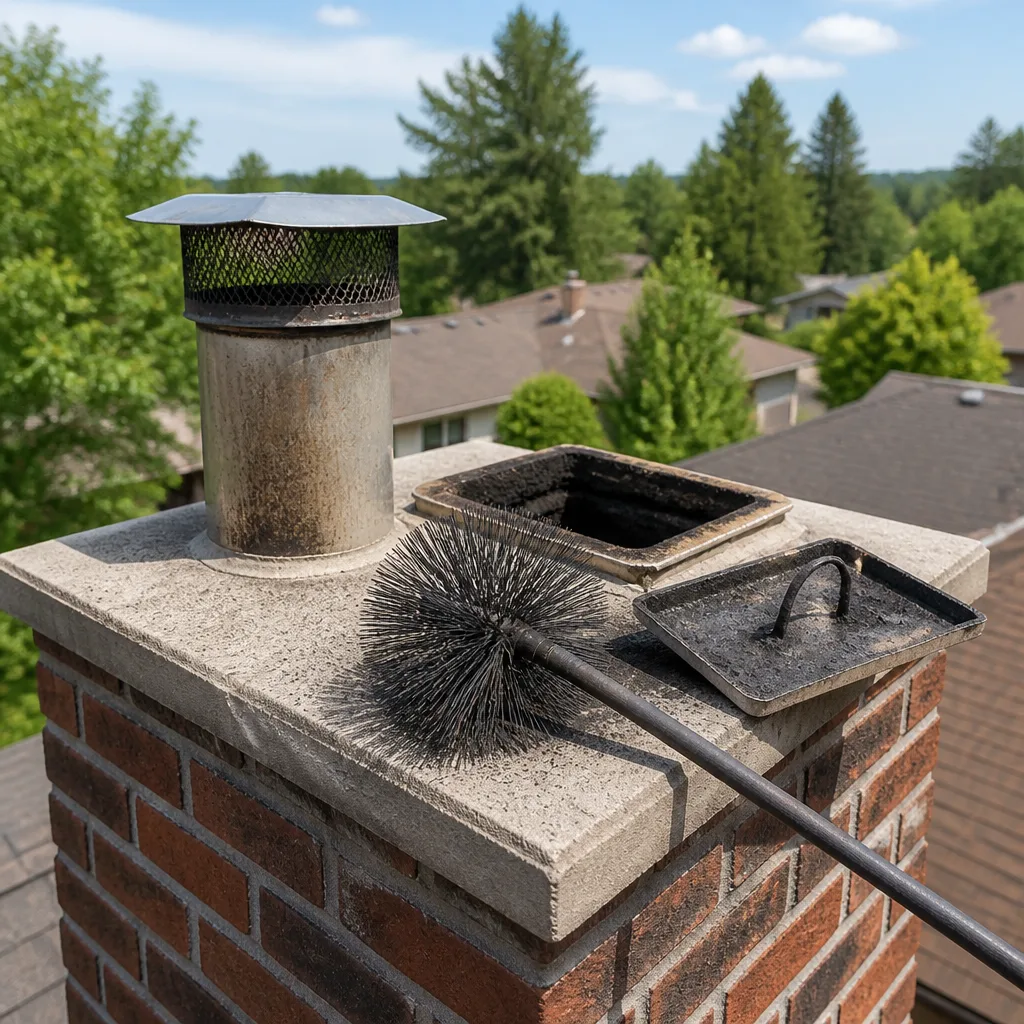 Sweep & inspection
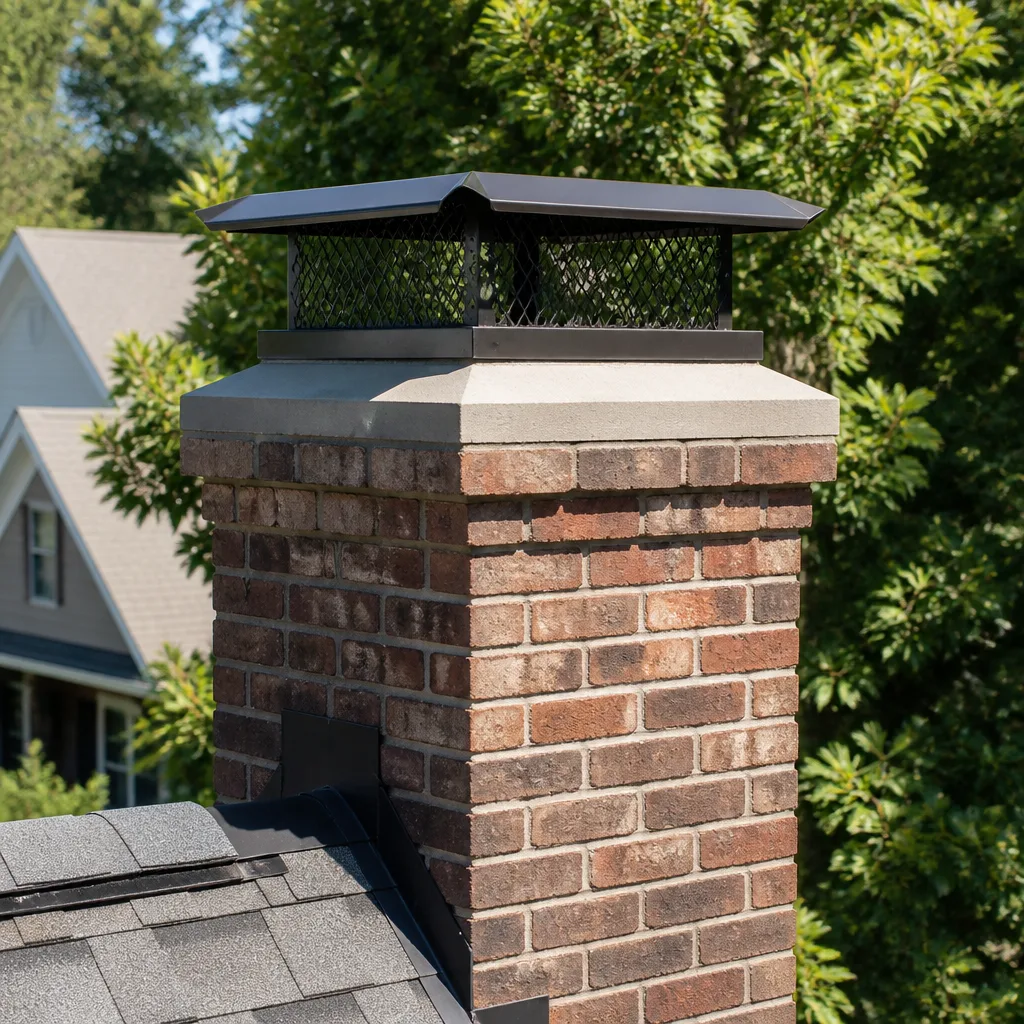 Caps & crowns
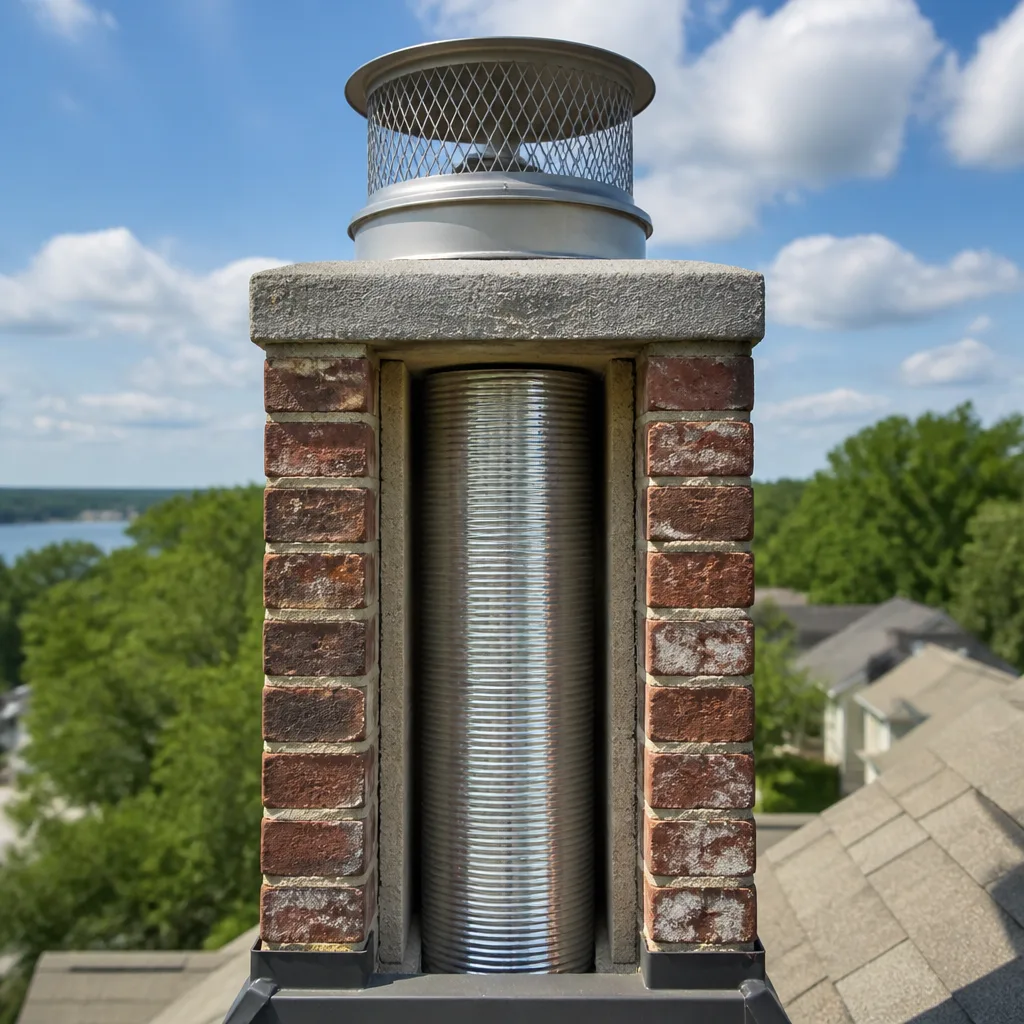 Flue relining
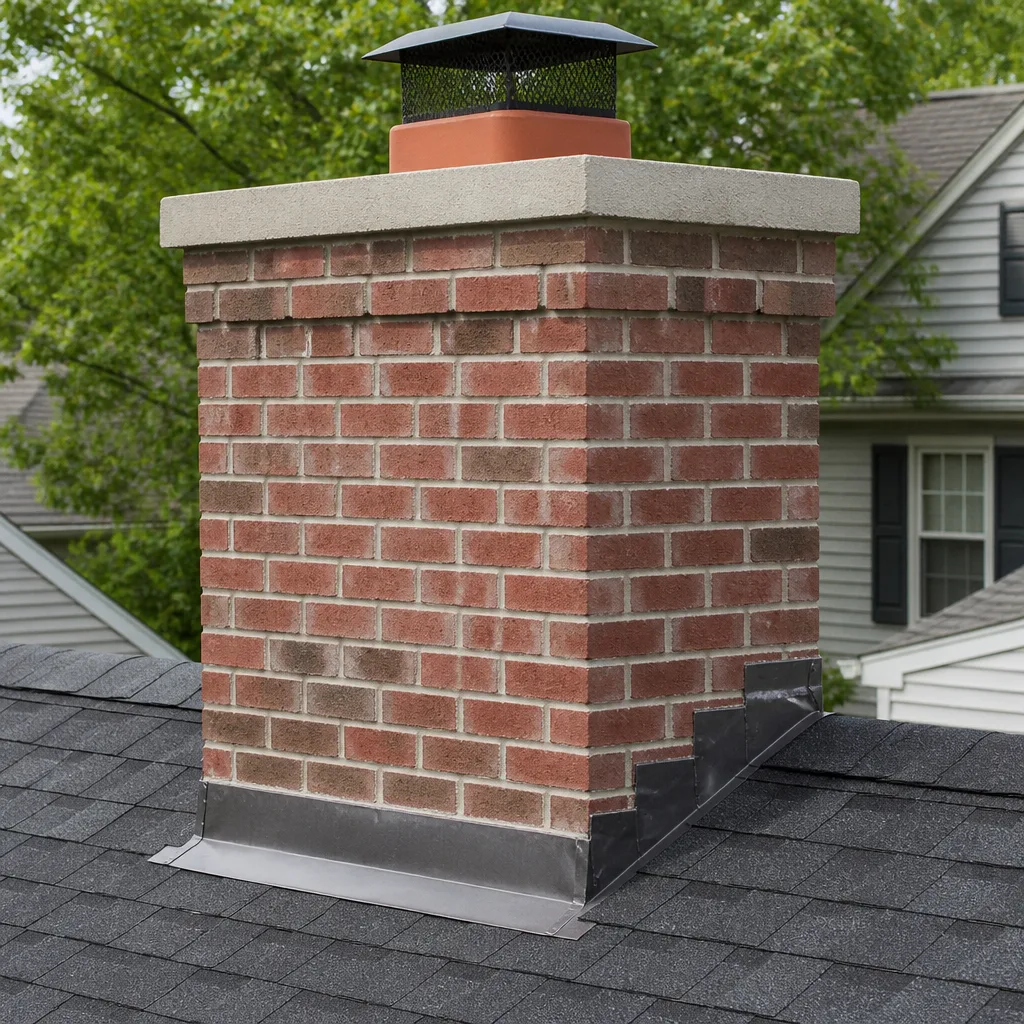 Masonry repair
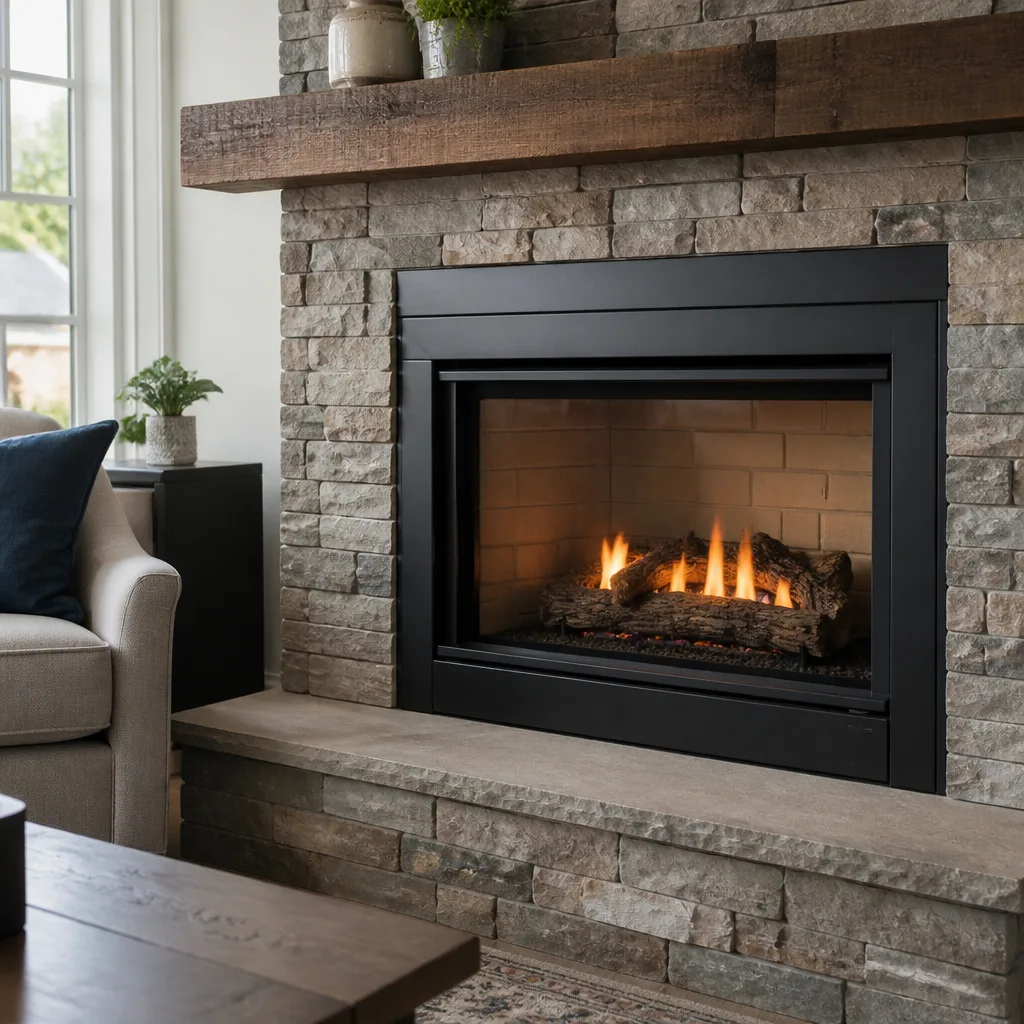 Gas fireplace service
Level 1 sweep and inspection to the NFPA 211 annual standard - flue, crown, cap, and flashing checked and photographed
Chimney sweep logs do not sweep chimneys. They loosen some creosote - which then falls where a brush and vacuum still have to collect it.
DIY vs Professional Chimney Cleaning: The Mesa Homeowner’s Decision Guide
You can legally clean your own chimney. The question isn’t whether you’re allowed to, it’s whether cleaning it yourself leaves you in a better or worse position than before you started. That’s the honest version of the DIY debate, and it gets skipped constantly. In our experience, property owners across Mesa can absolutely handle part of this job, and genuinely should not handle the rest. This guide draws the line where it actually sits. You’ll learn what a trained sweep looks for that a brush and a ladder won’t reveal, what a one-time equipment purchase really costs compared to ongoing professional service, and which scenarios call for a phone call before anyone climbs a roof.
Quick Answer
For a gas fireplace with little use, a homeowner checks the obvious and it’s fine. For a wood-burning chimney with any unknown history, professional cleaning is the safer call because the two things DIY misses (third-degree creosote and liner damage) are exactly the two things that cause chimney fires and carbon monoxide problems. A professional sweep also puts a camera inside, so you get a diagnosis, not just a brushing.
Styles & brands we work with
- Sweep & inspection
- Caps & crowns
- Flue relining
- Masonry repair
- Gas fireplace service
Table of Contents
- What DIY Chimney Cleaning Almost Always Misses
- The Real Math on DIY Equipment vs Annual Professional Service
- When DIY Is Genuinely Reasonable in Mesa
- When DIY Is Genuinely Risky
- What Mesa Homeowners Discover Mid-Job That Stops the Work
- How to Do a Legitimate Pre-Season Visual Check Yourself
- What a Camera Sees That Your Eyes Cannot
- Why the Call Isn’t the Expensive Part
What DIY Chimney Cleaning Almost Always Misses
Two failures account for nearly every problem we find after a homeowner has cleaned a chimney themselves: third-degree creosote and liner integrity. Neither is visible from above or below with a flashlight. Neither is caught by a brush sweeping up the flue. A chimney that looks clean from the firebox and sounds clean from the roof can still hold both problems.
Creosote forms in three general stages. First-degree creosote is a light soot you can dust away. Second-degree creosote is a harder, flaky deposit that a brush can usually manage. Third-degree creosote is a baked-on, glazed layer that fuses to the liner tiles. A standard brush doesn’t remove it. In fact, a stiff brush can polish it into an even harder shell. Only chemical treatment and mechanical tools remove it, and there is no way to identify it from the ground with your eyes. The glazed layer is also the most combustible. That’s the safety part, not just the appearance part.
Liner integrity is the second blind spot. A clay tile flue liner cracks. It chips. Mortar joints loosen and gaps open between tiles. A homeowner sweeping from the top down is pushing a brush through a tube he cannot inspect. When the brush clears the creosote, a cracked liner can let combustion gases pass through the crack into the home’s framing cavity. Sometimes years go by before anyone notices. We don’t say that to alarm people, but it’s the accurate answer to why professionals use a camera.
A trained sweep checks the flue for both problems. Our technicians have up to 11 years of experience, they use a camera, and they know what a distressed tile looks like compared to a dirty one.
The Real Math on DIY Equipment vs Annual Professional Service
Here’s the cost comparison most DIY guides skip. They tell you a chimney brush costs a fraction of a professional sweep without adding up the rest of the equipment. And the totals only make sense if you’re planning to clean this chimney multiple times over many years, not once.
A usable one-time DIY setup for a typical masonry chimney generally includes:
- Chimney brush sized to your flue – the brush must match the flue dimensions, and flues vary. Wrong size means either no cleaning or damage to the liner.
- Rods to drive the brush – flexible enough to go around offsets, stiff enough to control the brush.
- A roof ladder or step ladder rated for the pitch – and the pitch on a Mesa roof is often steeper than a homeowner anticipates.
- Safety harness or roof anchors – falls are the reason roof work is classified as high hazard. Cost alone doesn’t cover this; the risk does.
- Respirators rated for fine particulates – chimney dust isn’t ordinary dust.
- Drop cloths and a shop vacuum with a HEPA filter – soot gets everywhere. Standard vacuums blow it back into the room.
Add those up and you’re most of the way to the cost of a professional sweep before you’ve climbed the roof. And that professional sweep usually includes a camera inspection and a report, which the DIY kit doesn’t include at any price. We’ll say it plainly: the math on a one-time DIY job rarely favors the homeowner. The math on doing it every year for many years can eventually pencil out, but only if you already own and trust the safety equipment for the roof work.
Where the numbers really shift is the dryer vent side. That’s a separate exhaust system, and our dryer vent cleaning covers it in the same visit as the chimney work, which is one reason we treat ventilation as one assessment rather than two disconnected jobs.
When DIY Is Genuinely Reasonable in Mesa
We’d rather tell you when DIY is fine than pretend it never is. These are the real scenarios where a homeowner can handle the basic work without professional help.
- A gas fireplace with light use and a documented history. If you know the appliance was installed correctly, it has been checked since, and it runs a few times a week for short periods of the year, the creosote load is minimal by design. A visual check and a light vacuum at the firebox is reasonable. The flue is short and the products of combustion are cleaner than wood.
- A newer wood-burning insert with a sealed, short, straight flue. Where the flue is accessible, straight, and simple, a homeowner who understands what he’s looking at can handle a routine brush-down. That’s a narrow set of conditions, but they exist.
- A pellet stove with manufacturer guidance at hand. Pellet burners produce less creosote than wet wood. Some manufacturers publish owner-performed cleaning procedures. If the manual says the owner can do it and gives steps, follow those steps and check the flue passage every season.
- Between-sweep housekeeping. Ash removal, checking the damper operates freely, cleaning the glass on a gas unit, and clearing a blocked chimney cap are all fair game for a homeowner who’s comfortable up there and has a stable connection to the roof.
Note what those scenarios have in common. You know the history of the chimney. The fuel is cleaner than wet firewood. The flue is accessible and uncomplicated. And you already have a safe way onto the roof. Remove any one of those and the calculation changes.
In Mesa, one more variable matters. The mild winters here mean fireplaces often go months completely unused, which makes it easy to skip the pre-season look. We don’t want to overstate that, but it’s part of why our chimney sweep service is booked before the burn season, not mid-winter, in our experience.
When DIY Is Genuinely Risky
These are the situations where the risk side of the equation wins. If any of the following describes your chimney, stop and call a trained professional.
- Any wood-burning chimney with an unknown history. The chimney doesn’t know how many owners it has had. It doesn’t know what was burned in it. If you cannot document the last inspection, you’re cleaning blind. There could be third-degree creosote, a cracked tile, or a liner that’s separate from the masonry.
- Signs of a past chimney fire. Puffy or honeycombed creosote, cracked tiles, warped metal, or heat-discolored metal caps all point at an event. Don’t sweep and move on until a professional has seen it.
- Any known liner damage or a flue that’s never been scoped. If you can’t see the inside of the flue, you can’t safely clean it. This is the case where our Mesa Chimney Sweep team’s camera work is non-negotiable, because the sweep is only as good as the diagnosis behind it.
- Liner types you don’t recognize. There’s a world of difference between a clay-tile flue, a stainless flex liner, and an aged cast-in-place liner. Running the wrong brush through the wrong material can damage what you’re trying to protect.
- Access that requires climbing above roof level, working near a steep pitch, or balancing on a tile roof. Roof work is genuinely hazardous. A fall is not a controlled cost. It’s a serious injury.
- Any gas appliance whose exhaust you can’t verify. Carbon monoxide is odorless. A gas fireplace that isn’t drafting correctly is a cause for concern, and the plug-the-hole-and-hope approach is not a safe one.
Do those scenarios sound scary? They are what a camera finds. That’s the point. If none of those apply and you have a simple, clean, well-documented chimney, the risk side is low. If any of them apply, the risk side is not.
What Mesa Homeowners Discover Mid-Job That Stops the Work
The pattern is real and it repeats. A homeowner starts the cleaning, finds something they didn’t expect, and the project stalls. What’s been found usually falls into these categories.
The brush won’t do what you need. A stiff brush encounters glazed creosote and comes back out with a polished shell still stuck to the tile. The brush did something, just not what was needed. Removing glazed deposits takes chemical treatment and mechanical tools, and that’s a professional job.
A crack shows up when the brush clears the soot. Sometimes the flue is fine and sometimes the soot was covering a problem the previous owner never addressed. Now the homeowner knows about it, and the safe move is to stop and get it inspected.
The roof access becomes a bigger problem than anticipated. The pitch is steeper than expected. The tile is slicker than expected. The ladder doesn’t reach or won’t sit securely. This is the number one reason a DIY job stalls mid-work. The cleanup has already happened, the house smells like soot, and the flue is half done. That’s a harder position than either doing it fully yourself or calling first.
The chimney hasn’t been swept in years. An old chimney can be loaded with creosote beyond what a homeowner can safely handle on top of a roof. Professional sweeps carry the rigging for heavy build-up and know how to contain the mess. A homeowner on a roof with a heavy load and no containment is in a genuinely unsafe spot.
The damage is already done. Sometimes the mid-job discovery is that the flue liner is compromised well beyond a simple cleaning fix. That’s when a restorative solution like HeatShield flue resurfacing, or a full liner install using DuraFlex flexible liner systems, becomes the right next step. And that’s the moment when stopping early costs more than it saves, because now the cleanup, the missing diagnosis, and the actual repair are three separate visits.
None of those scenarios are reasons to panic. They’re reasons to know what you’re walking into before you climb up.
How to Do a Legitimate Pre-Season Visual Check Yourself
A homeowner can and should do a basic visual check before burn season. In our experience, checking your home before the first fire is one of the highest-value things you can do, and it isn’t cleaning. It’s noticing. Here’s the sequence.
- Close the fireplace doors before you start. You’re checking, not cleaning yet. Close the damper and open the doors only for the parts of the check that require access.
- Shine a bright light into the firebox and look straight up. Look for heavy, flaky deposits, obvious staining, and anything that looks like puffy, honeycombed creosote. Note any gaps between tiles or missing mortar.
- Look for water staining and rust. Moisture coming down a flue is a real signal. Stained masonry, white salt deposits, or rusted metal components all point at moisture moving where it shouldn’t.
- Operate the damper. It should open and close fully and smoothly. If it binds, or if you can’t tell whether it’s open or closed, stop and call.
- From outside, look at the chimney top. From ground level, look at the cap and the crown. A missing or rusted cap lets water and animals in. A cracked crown is a moisture problem in progress.
- Smell and observe the room while a low fire burns. If smoke comes back into the room, if the fire gets smoky, or if you smell gas from the firebox, turn off the appliance, open a window, and call for help. Any carbon monoxide alarm at any time should mean leaving the home and calling for emergency services.
- Walk outside and look for debris. Bird nests, leaves, and twigs in and around the cap are common in this climate. They’re also easy to check and easy to spot.
- Note what you see. Write down the date and what you observed. That record is exactly what makes a real inspection more useful on the next visit.
What a visual check cannot do is tell you the state of the liner on the inside of the flue. That requires a scope. If your visual check turns up anything in items 2, 3, 4, 6, or 7, that’s your answer to whether you should call. You don’t need a second opinion from a brush and a ladder.
The dryer vent side is the same idea. With a dry, mild climate like Mesa’s, lint and debris build-up in the vent line is a common cause of residential house fires, and a visual check of the vent discharge at the outside wall is worth a few minutes before you run the dryer hard in a busy season.
What a Camera Sees That Your Eyes Cannot
The single most important difference between DIY and professional cleaning is the camera. It’s not the brush. It’s the inspection that goes with it. Here’s what a proper camera inspection reveals.
- Cracked, chipped, or missing flue tiles. Damage to a clay liner is not always visible from the firebox and it’s never visible from the top of the flue.
- Separated mortar joints. A gap between tiles lets combustion gases escape the flue and enter the chimney cavity or the house itself.
- Liner material and condition. Whether a flue is clay tile, stainless flex, cast-in-place, or something older determines what kind of cleaning is even appropriate. A camera clarifies it.
- Creosote depth and glazing. How much creosote and how hard it is tells the technician what tools to use and whether the flue is at a higher risk for a chimney fire.
- Obstructions. Animals, nests, leaves, fallen caps, or debris lodged in the flue all show up immediately.
- Prior repair work. Old patches, prior relining, and the state of the smoke chamber all show up on camera and change the plan.
When our team inspects, you get to see what we see. We show you the video and photos, explain what they mean in plain language, and say honestly if a problem can wait. That’s how the DIY vs professional conversation gets resolved correctly, because nothing is recommended without evidence you can look at yourself.
Why the Call Isn’t the Expensive Part
We want to be direct about the value question. A professional sweep costs money. So does a chimney fire, a burst of smoke damage, or a liner repair that would have been avoidable if the problem had been found early. And the third cost is the one people miss: the cost of a home whose chimney is an open question every year.
In Mesa, our service is set up so the first visit resolves exactly what the DIY question is really about. Our technicians have up to 11 years of experience, and they don’t just clean. They inspect, diagnose, and when they find damage, they can address it on the same visit with the materials the work actually needs. HeatShield resurfacing can restore a damaged flue in place without a full teardown in some cases. A DuraFlex flexible liner reestablishes a proper flue when the old one is compromised. And we stock pro-grade materials to make the correct repair, including brands like Gelco and Olympia Chimney, rather than whatever is on a shelf at the local hardware store.
That matters because a sweep-and-leave operation, and a homeowner with a brush, both end up in the same place if there’s damage: with a report and no fix. Our scopes connect the diagnostic and the corrective work. The same is true of the exhaust system on the other side of the house, which is why our dryer vent work pairs naturally with chimney work in the same visit rather than as a separate trip later.
What’s the actual math? The right call is not “DIY versus professional” as a cost comparison. It’s “DIY versus DIY plus a camera diagnosis plus a real fix, sometimes in a single visit.” On a clean, simple, documented chimney, DIY saves money. On an old, unfamiliar, or already compromised chimney, DIY costs more, because the problem gets discovered anyway and costs more to resolve after the fact. That’s our honest read.
Common Mistakes to Avoid
- Buying a single brush and assuming it fits every chimney. Flues come in different dimensions. A brush too large for the flue damages tile; one too small for the flue doesn’t clean. In our experience, we’ve had customers call after cleaning with the wrong size, and the work has to be redone.
- Burning trash, wrapping paper, or wet firewood. In a dry, mild-winter climate like Mesa’s, homeowners often treat the fireplace as a disposal for cardboard and damp logs. Both increase creosote. Dry, seasoned hardwoods only.
- Skipping the pre-season look because the weather is mild. We see this every year. A fireplace that barely ran last winter is the one that sits all summer unnoticed and starts fall with a full load. A visual check in early autumn is worth ten minutes.
- Ignoring the cap. Missing or rusted caps are simple to fix and costly to ignore. Animals get in, water gets in, and debris accumulates at the top of the flue. In this climate, a cap check is basic housekeeping.
- Not recording what was done and when. Write down the date, what was cleaned, and what was observed. It’s the single best habit for making the next sweep faster and cheaper for everyone involved.
- Stacking furniture or boxes close to the firebox and the dryer vent outside wall. Clearance to combustibles matters around both appliances. Fireplace mantel clearances and dryer vent clearances are both part of the same safety picture.
- Calling a low-cost sweep, getting a clean flue, and calling it done. The cleaning isn’t the whole job. The diagnosis is. If a low-cost sweep doesn’t leave you with a photo report or a camera view of the flue, you know as much about the liner as you did before they arrived.
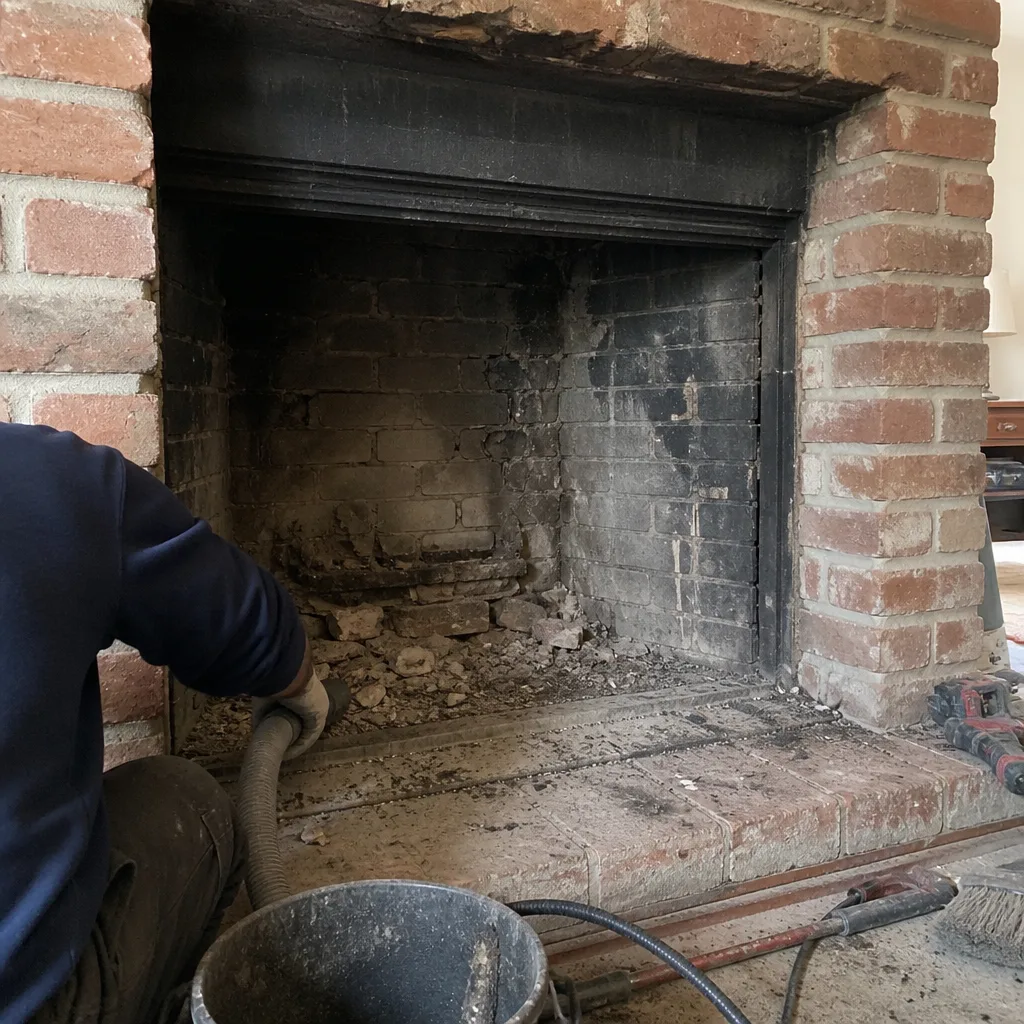
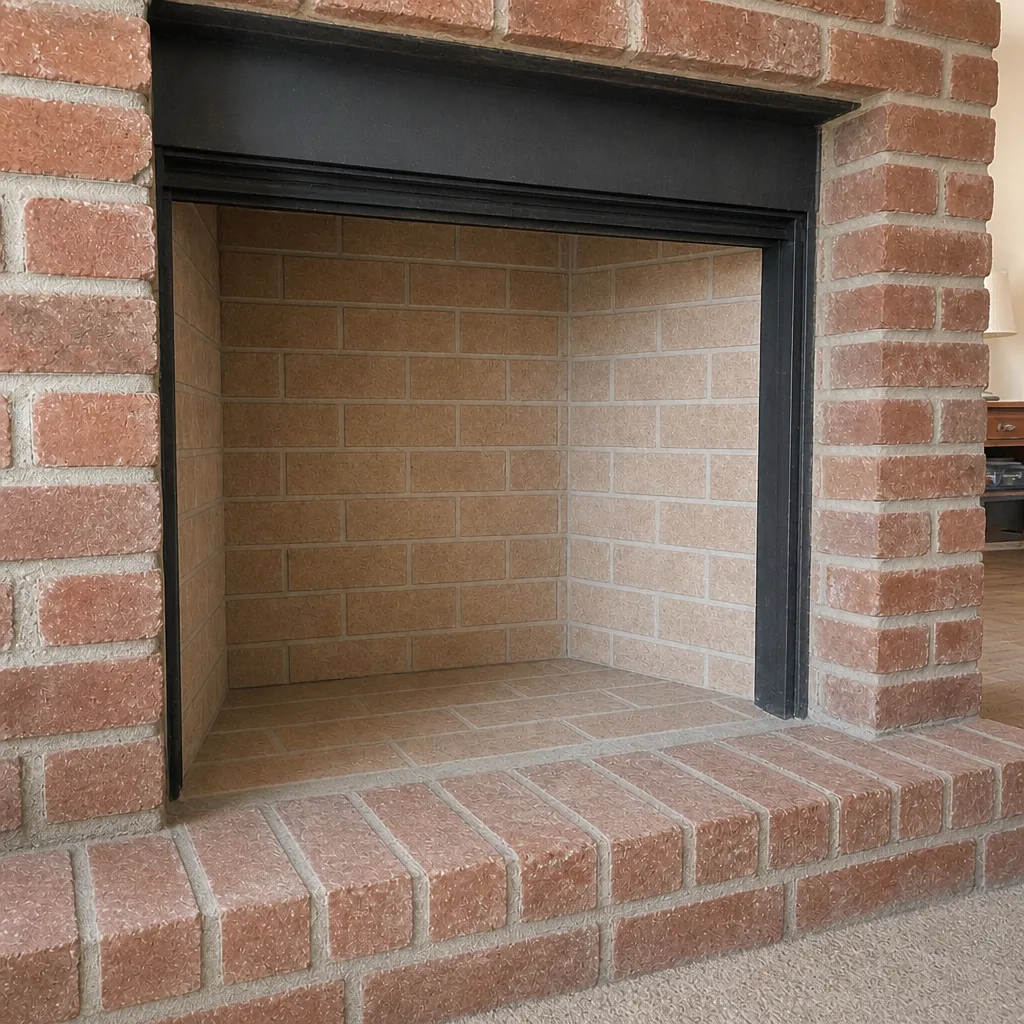
See the difference
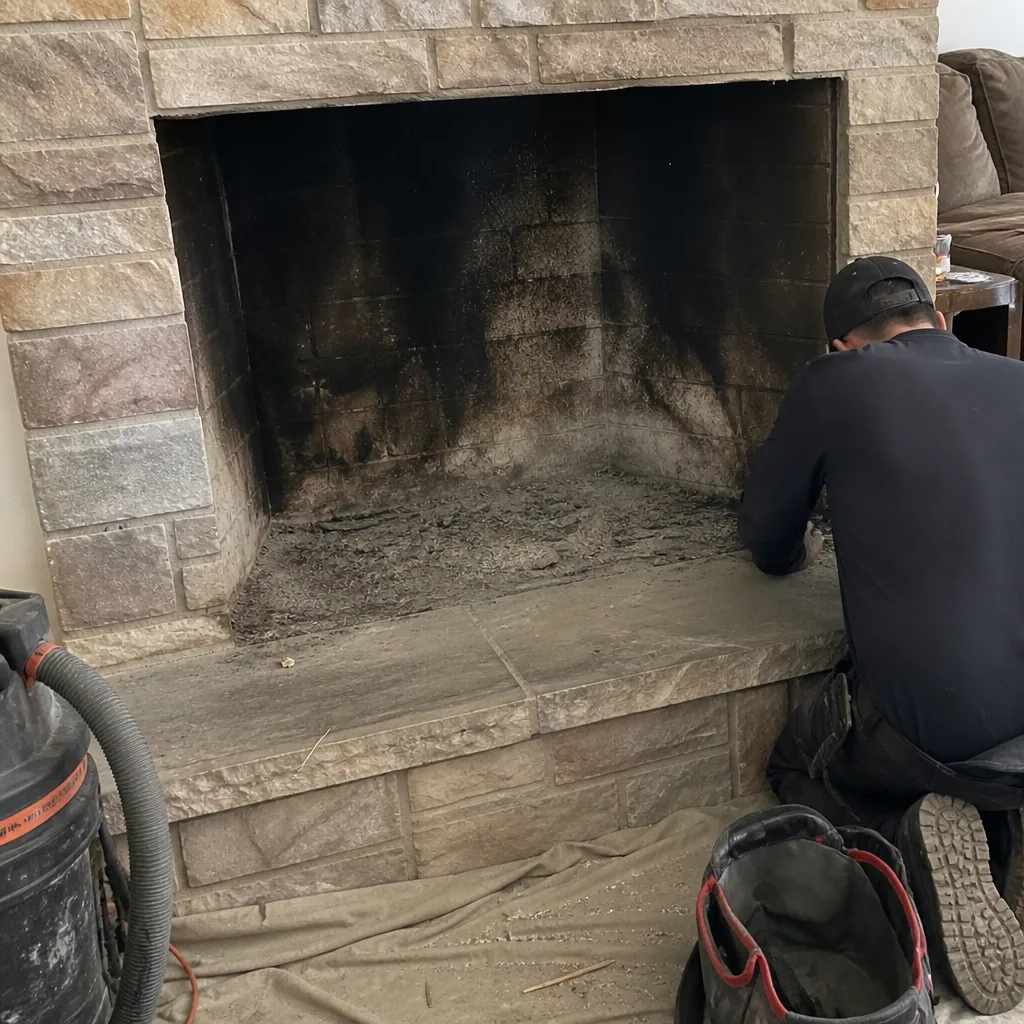 Before
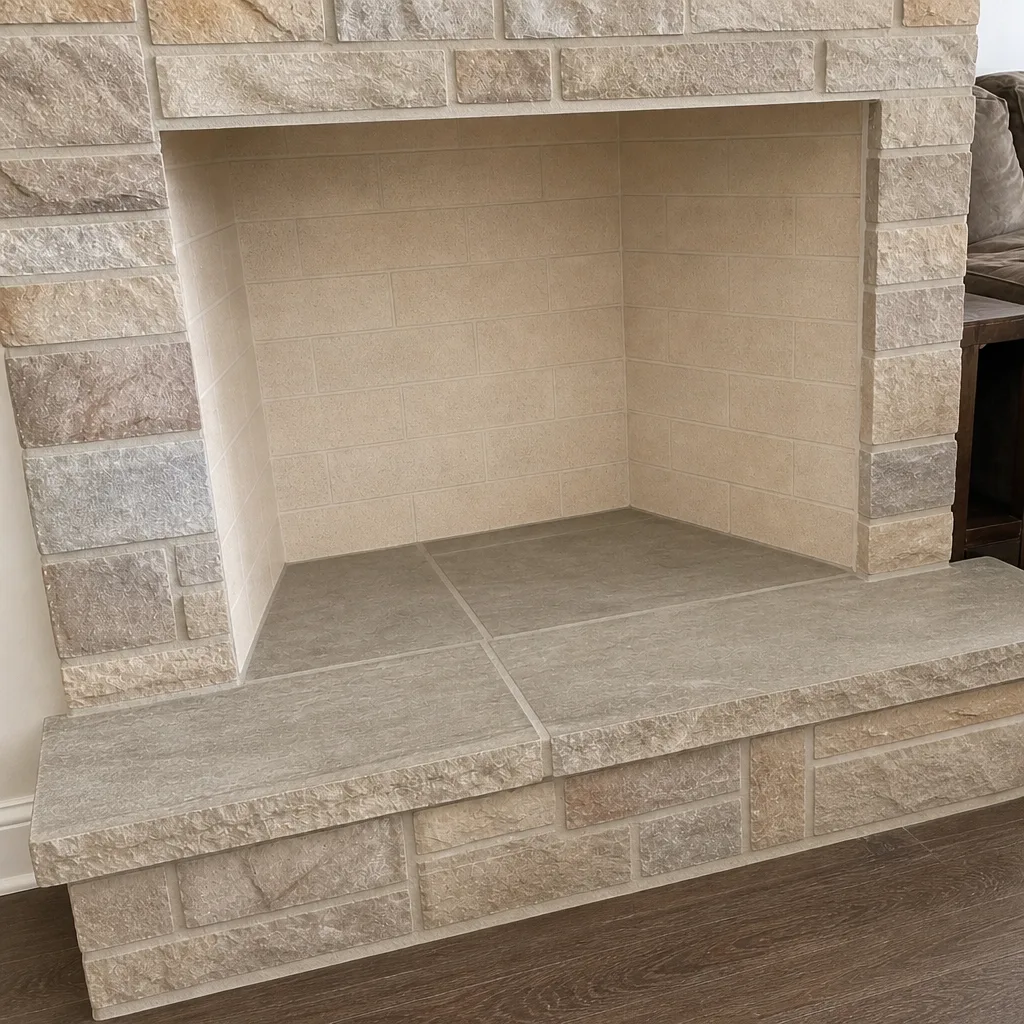 After
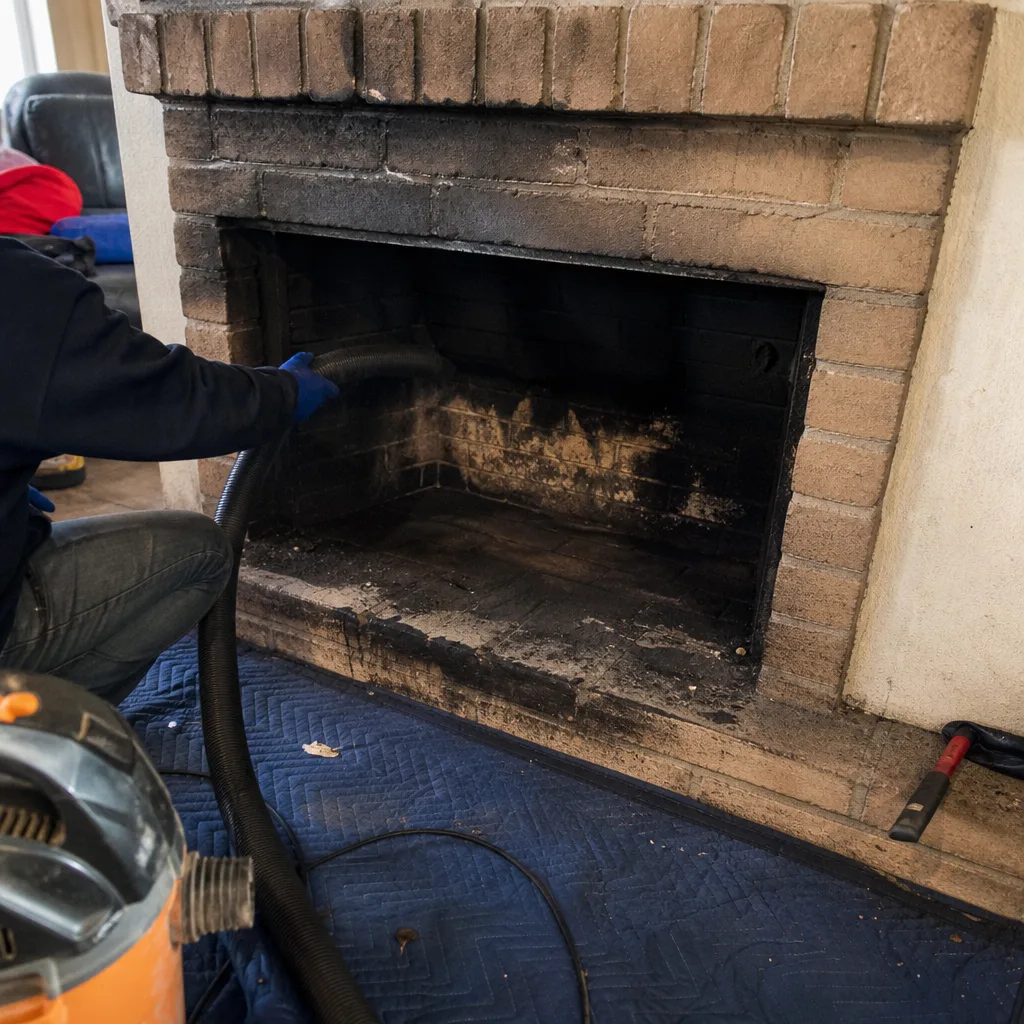 Before
 After
 Before
 After
When to Call a Professional
Call us when any of the following apply: you don’t know the chimney’s history; there’s been a chimney fire or you suspect one; the damper, cap, or crown is damaged; the firebox or flue shows staining, puffy creosote, or gaps; you’re making a real estate decision and need a documented inspection; or the roof pitch and access don’t feel completely safe. In any of those cases, hire a professional rather than a brush and a ladder. Our technicians are experienced, licensed, insured, and set up to repair what they find. Mesa Chimney Sweep offers free estimates in Mesa, and we can talk through your chimney’s situation over the phone before anyone climbs up. Call (866) 796-7711 for a free estimate.
Frequently Asked Questions
Yes. Cleaning your own chimney is legal. Ownership gives you the right to work on your own home’s chimney, and there’s no licensing barrier for a homeowner doing their own maintenance. The reason to hire a professional isn’t legal permission; it’s the two things DIY typically misses (third-degree creosote and liner integrity) and the genuine hazard of roof access. If those aren’t factors for your chimney, DIY is a reasonable choice. Call (866) 796-7711 for an exact quote if you want a professional opinion first, because estimates are free.
Every job is priced by written estimate because every chimney is different, and we don’t want to quote a number before we know what’s up there. A standard sweep and camera inspection is one price, and if the inspection turns up a repair need, that’s quoted separately and only after you’ve seen the evidence. Call (866) 796-7711 for an exact quote, since estimates are free.
Only if the liner is genuinely compromised, and we don’t recommend a liner based on a guess. A camera inspection shows exactly what’s going on. When a clay tile liner has cracks or separated joints, there are two paths: HeatShield flue resurfacing, which restores the flue in place, and a full liner install using DuraFlex flexible liner systems. Sometimes no liner work is needed at all, and we say so. Call (866) 796-7711 for an exact quote, since estimates are free.
For a wood-burning fireplace in regular use, plan on an annual inspection, with a cleaning on the years the creosote load actually calls for one. For a gas fireplace with light use, annual inspection is still the safest baseline. The mild winters in Mesa mean fireplaces often sit unused for long stretches, which makes the pre-season check even more important. Call (866) 796-7711 for an exact quote, since estimates are free.
The creosote keeps accumulating and the liner keeps aging without anyone seeing it. That combination is the exact condition that leads to chimney fires, and it’s the reason an inspection matters even when the fireplace “seems fine.” Carbon monoxide risk enters the picture when a liner is compromised and exhaust gases find a way out of the flue. We don’t say that to frighten anyone, but it’s the real answer. Call (866) 796-7711 for an exact quote, since estimates are free.
You can clear the lint trap and inspect the vent termination at the outside wall yourself. The inside of the duct line is a different matter, and a professional cleaning covers the full run. That’s why our dryer vent cleaning is offered alongside chimney service, not as an afterthought, and a combined visit is a practical way to check both exhaust systems at once. Call (866) 796-7711 for an exact quote, since estimates are free.
The Bottom Line
The DIY chimney cleaning debate isn’t really about permission. It’s about whether cleaning it yourself leaves you in a better position, and the honest answer is that it often doesn’t, not because you can’t sweep a flue, but because a sweep is the smallest part of what needs to happen. The two things your brush can’t see (glazed creosote and liner damage) are the two things that matter most. Do a visual check yourself. Know your chimney’s history. Then decide whether DIY or professional service is right for your chimney, based on the actual condition of the flue, not on the cost of a brush. Mesa homes with older chimneys deserve the camera inspection and a plan for whatever it finds.
Contact Us
If you’d like us to look at your chimney in person, or just want to talk through your situation over the phone, we’ll give you a straight answer. We serve Mesa and the surrounding area and will tell you honestly whether your chimney can wait or needs work now. Call (866) 796-7711 for a free estimate. We answer 24/7. Fast dispatch, 7am-7pm, Sunday through Friday.
Written by the team at Mesa Chimney Sweep.