
Last updated November 15, 2026
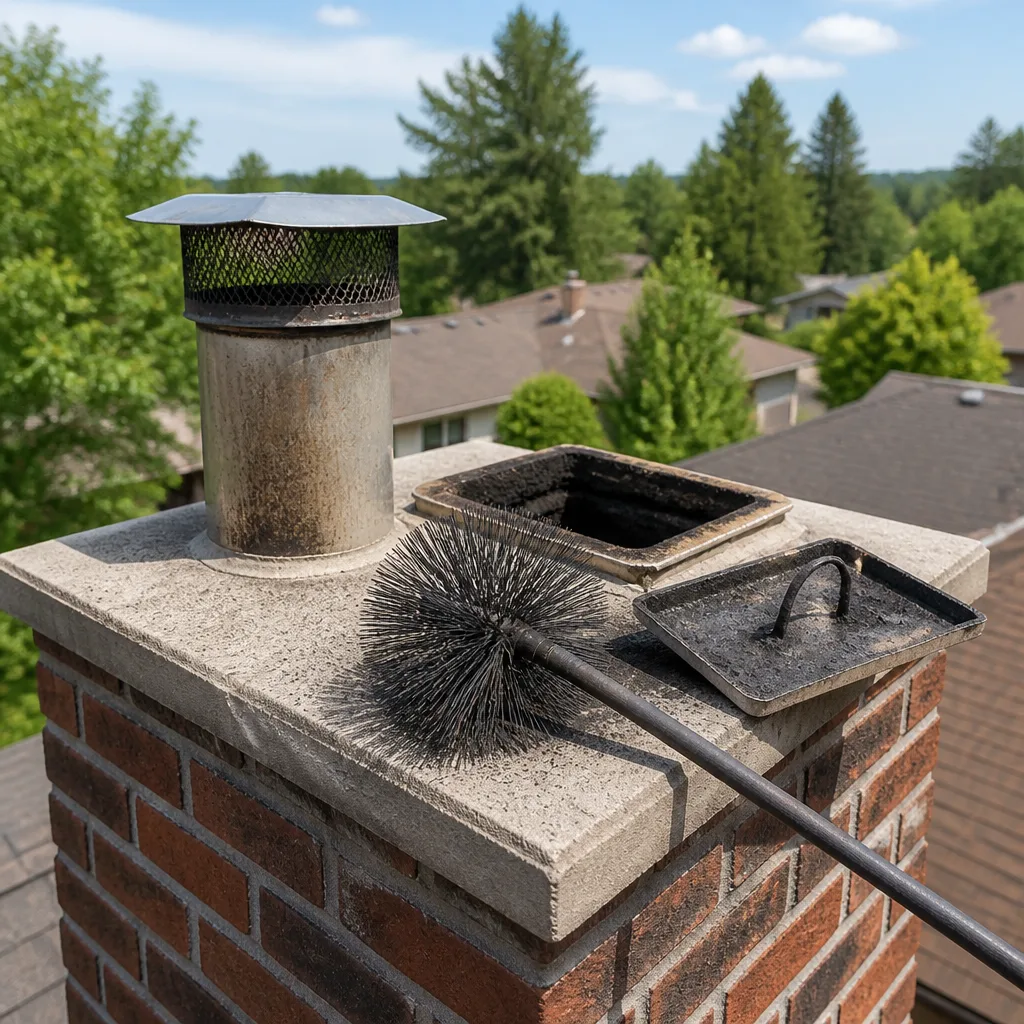 Sweep & inspection
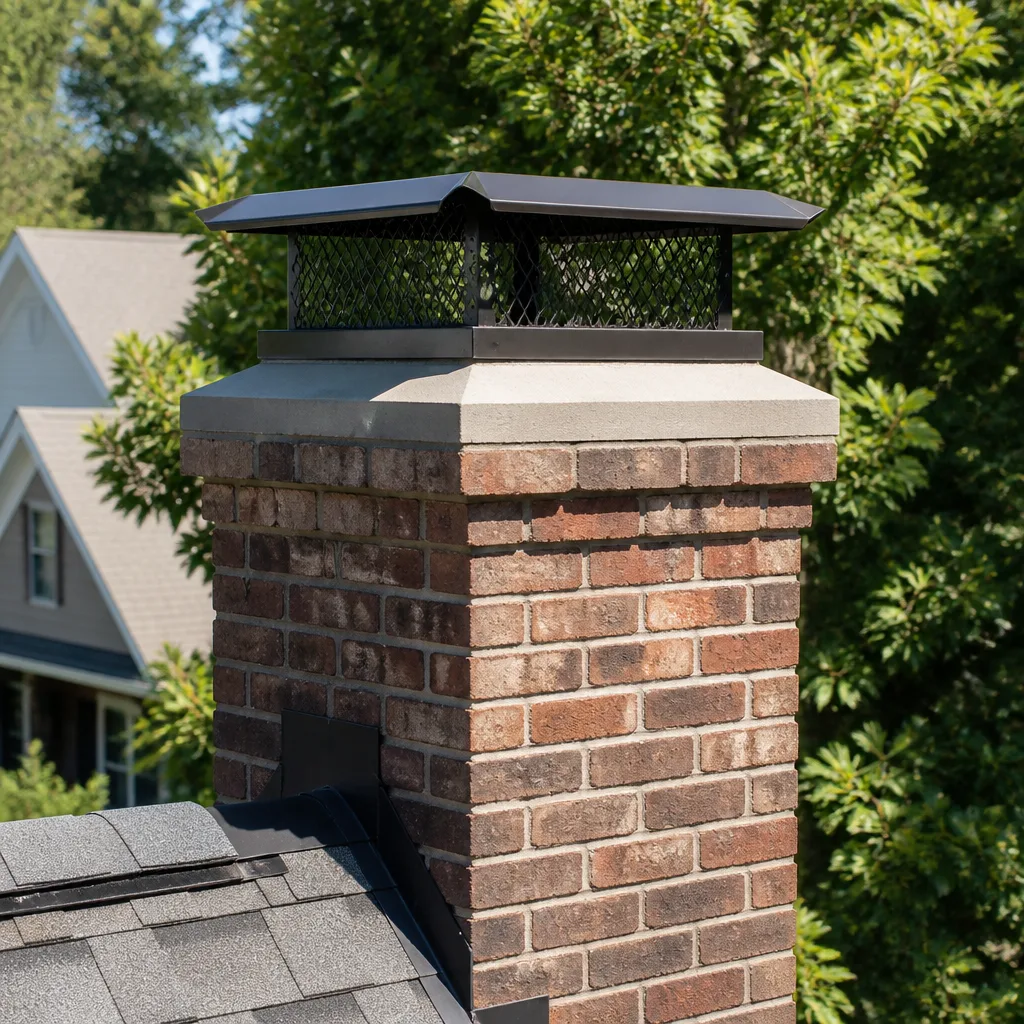 Caps & crowns
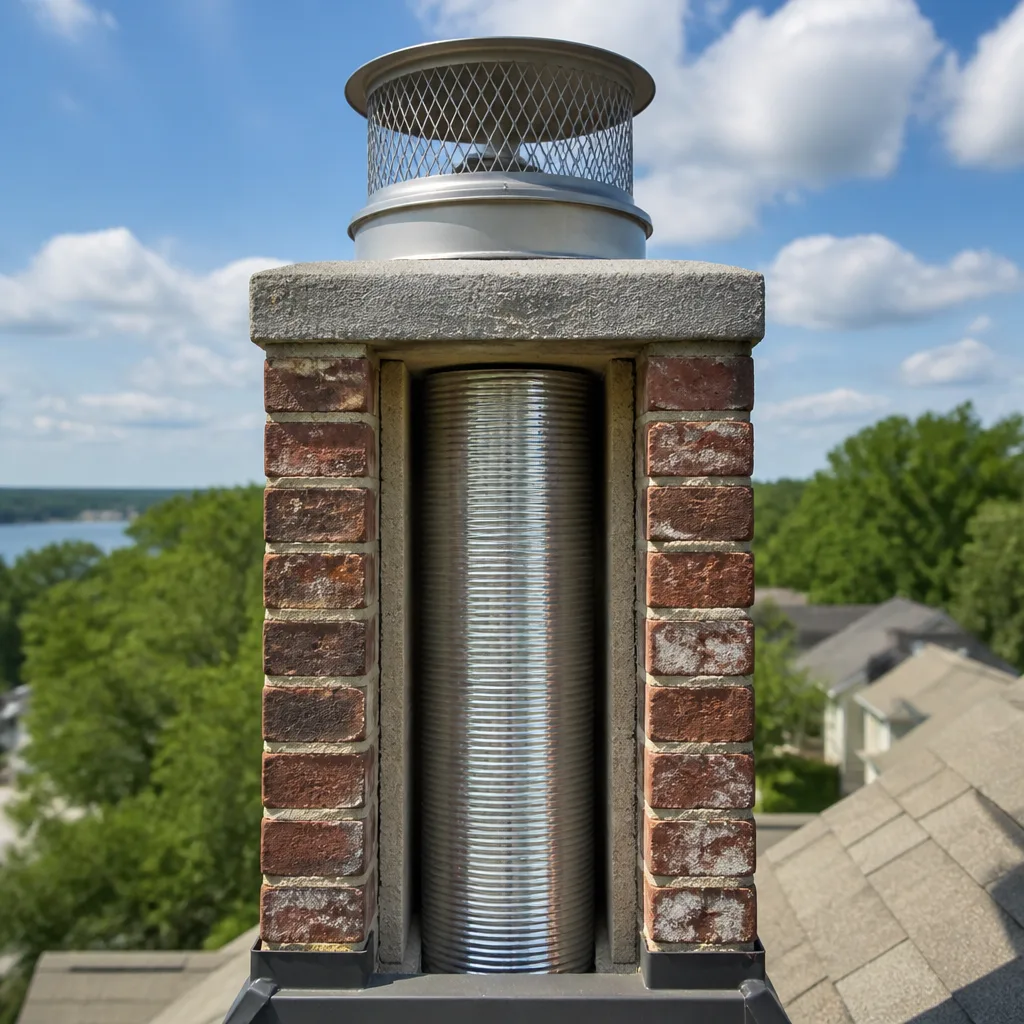 Flue relining
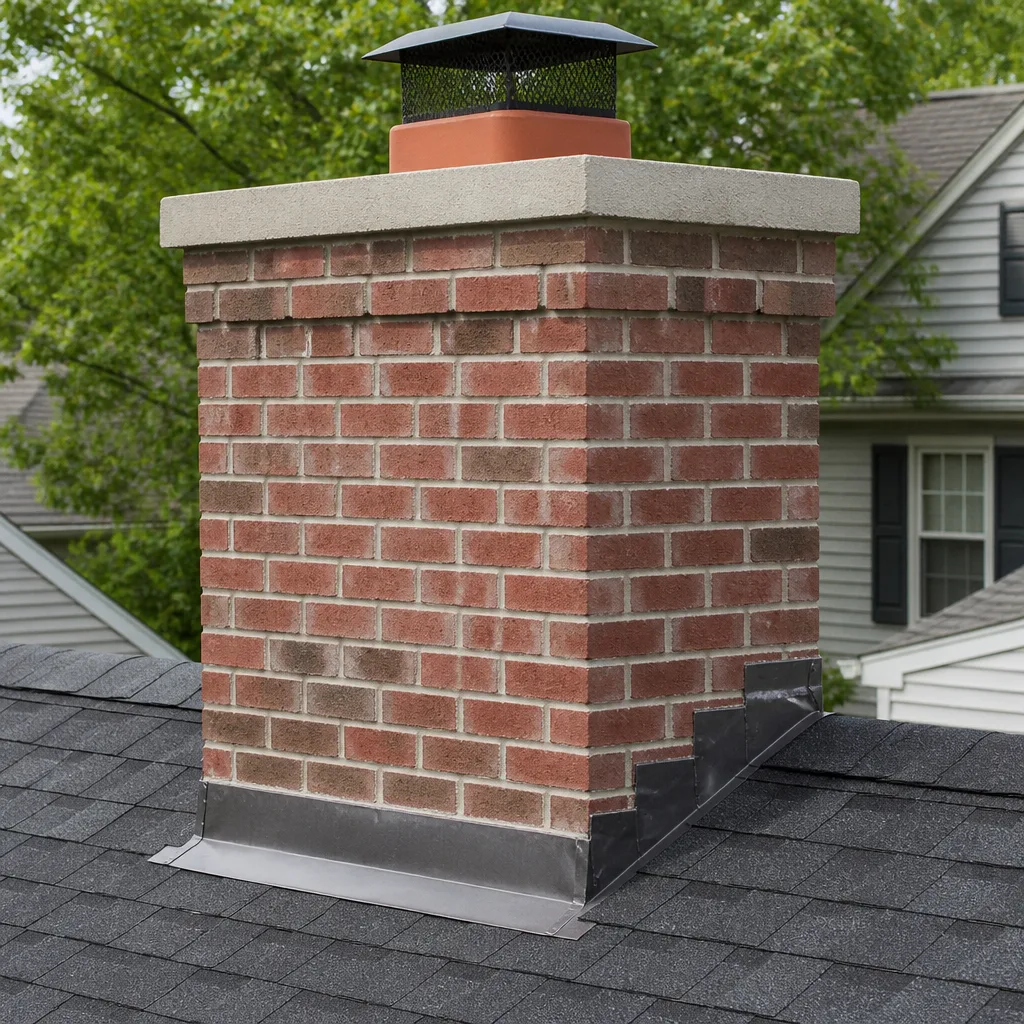 Masonry repair
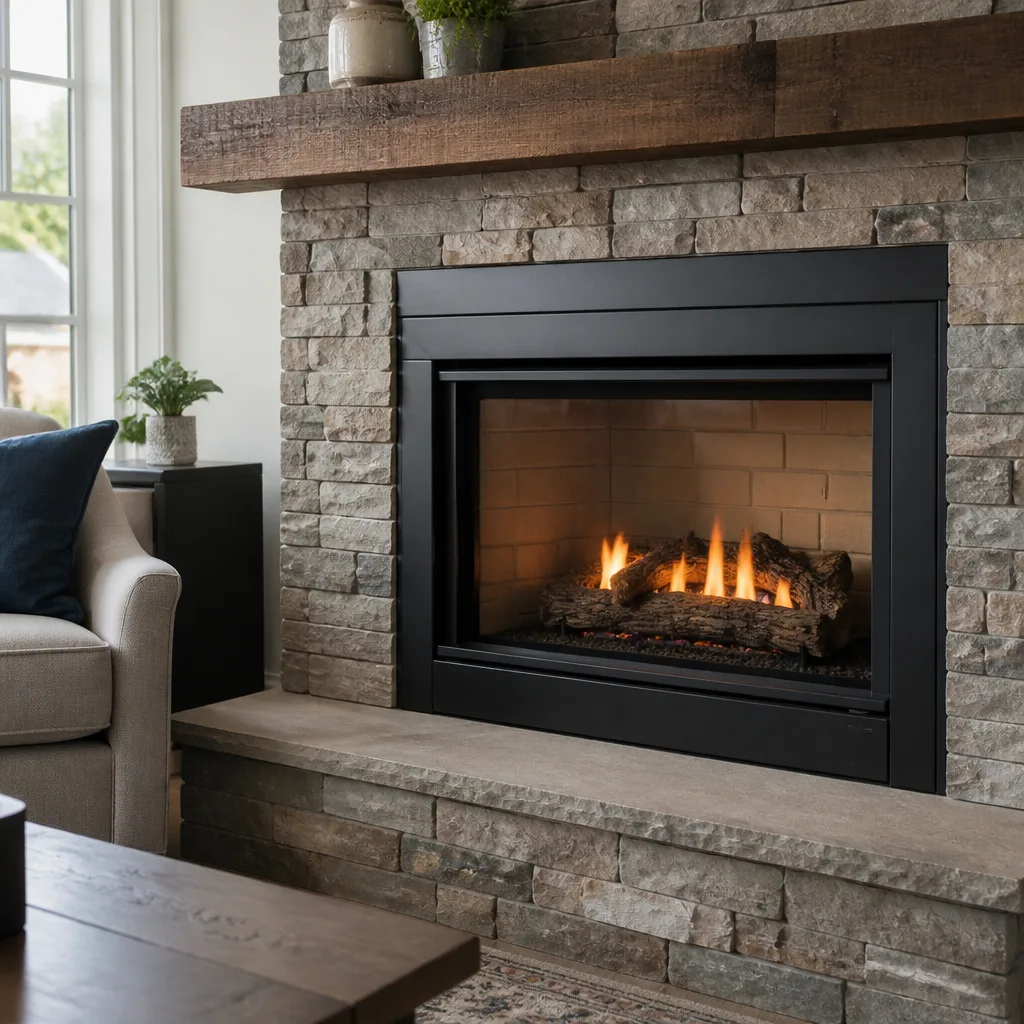 Gas fireplace service
Level 1 sweep and inspection to the NFPA 211 annual standard - flue, crown, cap, and flashing checked and photographed
Chimney sweep logs do not sweep chimneys. They loosen some creosote - which then falls where a brush and vacuum still have to collect it.
Seasonal Chimney Cleaning Care for Mesa: Year-Round Homeowner’s Guide
In Phoenix metro, the fireplace season is short. The chimney damage season is not. Most chimney advice you’ll read assumes a cold-weather climate with a long burning season and a quiet summer, so it tells you to book a sweep in the fall and forget about the chimney until the first cold snap. Mesa doesn’t work that way. Our heaviest chimney damage arrives in July and August, when monsoon storms push wind-driven rain against crowns, mortar joints, and flashing while the flue is still radiating heat from June. By the time you light your first fire, most of the harm is already done. This guide restructures the chimney calendar around what actually happens to a Mesa roof over twelve months, covering monsoon checks, summer heat cycling, the right window for pre-season cleaning, and the spring tasks that protect a chimney when nothing is burning in it.
Quick Answer
In Mesa, chimney care follows a year-round cycle rather than a fall-and-forget routine: the critical inspection window is September, immediately after monsoon season, followed by a pre-season sweep in October that clears summer debris and confirms the flue is safe before the first burn. Summer heat cycling and monsoon moisture, not winter freezing, are the two forces that do the most damage to chimneys here, which is why a single annual fall cleaning misses the failures that matter most in this climate.
Styles & brands we work with
- Sweep & inspection
- Caps & crowns
- Flue relining
- Masonry repair
- Gas fireplace service
Table of Contents
- Why Mesa’s Climate Rewrites the Chimney Calendar
- What Monsoon Season Does to Your Chimney (and How to Check in September)
- Why Summer Heat Cycling Causes Cracks That Show Up in Winter
- The Optimal Pre-Season Cleaning Window in Mesa
- Post-Monsoon Inspection Priorities Ranked by Failure Risk
- Spring Tasks That Have Nothing to Do With Burning
- The Other Exhaust System in Your Home
- The Full Year at a Glance
Why Mesa’s Climate Rewrites the Chimney Calendar
Standard chimney advice is written for places where the biggest enemy is a hard freeze: water gets into masonry, freezes overnight, expands, and cracks the mortar. That model doesn’t describe Mesa. Winters here are mild, and the more relevant threats are the ones that show up in summer and early fall. The sun bakes exposed masonry for months, the flue cycles between the intense heat of a burning fire and the cool of an idle chimney, and then the monsoon arrives with driven rain and dust that find every crack the heat opened.
There’s a second factor most homeowners overlook. Mesa homes often sit on older roofs where the chimney crown, the concrete cap at the very top, has taken years of direct sun. Concrete gets brittle when it’s cooked and cooled repeatedly, and a hairline crack in a crown is invisible from the ground. That same hairline becomes the entry point where monsoon water gets into the flue and the framing.
What Mesa’s climate means in practice:
- The most damaging season is summer, not winter. Heat expansion, monsoon rain, and wind-blown dust all hit between June and September.
- Fall cleaning alone misses the point. By October, damage from the summer has already happened. You need to inspect for it, not just sweep it away.
- Spring is a protection season, not a burning season. Tasks like cap and screen checks keep pests and water out of an idle flue.
- The checkup is seasonal, not annual. The right rhythm is two touchpoints per year, one after monsoon and one before the burning season starts.
If you’re new to the area, or to a home with a fireplace, the broader overview on our Mesa Chimney Sweep page is a good starting point for what a full-service scope includes. The rest of this guide builds the calendar around it.
What Monsoon Season Does to Your Chimney (and How to Check in September)
Monsoon moisture is the most underrated chimney threat in Mesa. Crowns, mortar joints, and flashing take the worst of it, and the damage is usually invisible from the ground. Between roughly July and September, wind-driven rain hits the top of the chimney at an angle it doesn’t face during a normal winter rain. That angle exposes weaknesses in three specific places, and all three are checkable in September if you know what you’re looking for.
The crown. The crown is the sloped concrete surface that sheds water away from the flue. When a crown cracks, water runs into the gap between the flue tile and the surrounding masonry instead of off the edge. From the ground this shows up as a stain on the chimney breast or a musty smell in the fireplace after a storm, not as a visible crack.
The mortar joints. Wind-driven rain pushes into joints that a straight-down rain never reaches. Any joint that was already weather-thinned will absorb water and then dry out, causing efflorescence (the whitish salt bloom that signals moisture cycling through the masonry). Catching this early is a repointing job; missing it lets water into the interior of the structure.
The flashing. The metal where the chimney meets the roof is the number one leak point on any roof in Mesa. Monsoon wind is enough to lift a loose flashing edge or work a fastener out, and once water is behind the flashing it tracks into attic framing and ceiling drywall.
A simple post-monsoon check you can do from the ground in September:
- Look at the crown from below with binoculars. A dark crack across the slope is a flag.
- Check the siding or stucco at the base of the chimney for water staining or efflorescence.
- Look at the attic side (walk up after the storm, not before) for dark water marks along the chimney chase.
- Smell the fireplace after the first rain. A damp, ash-and-mildew smell means water is getting in somewhere.
- Check the cap and spark screen. Missing or bent screens let birds and debris in, and a blown-off cap leaves the flue wide open.
If any of those five turn up something, book a professional inspection. We can’t say from a phone whether a given crack is serious, and that’s the point: the evaluation has to happen at the chimney, not on the driveway. Working with a full-service company matters here, because our technicians have up to 11 years of experience and we carry the materials to fix what we find on the same visit. The chimney sweep visit includes an inspection specific to Mesa’s post-monsoon conditions.
Why Summer Heat Cycling Causes Cracks That Show Up in Winter
Summer heat cycling is the second half of Mesa’s damage story, and it’s the one most homeowners are surprised to hear about. Here’s the mechanism. Through a Mesa summer, the exterior masonry on a chimney can sit at extreme surface temperatures in direct sun while the interior stays much cooler. Over a whole season, the outside expands and the inside doesn’t, which is exactly the condition that opens hairline cracks at the mortar joints, at the crown transition, and along the clay flue tiles.
Those cracks don’t announce themselves. The first sign of trouble usually appears months later, in the winter, when one of three things happens:
- A flue tile shears. The clay liner tile cracks along the hairline that the summer opened. Burning a fire in it then pushes hot gas and creosote through the gap into the surrounding masonry.
- A crown edge crumbles. The first winter rain finds the crack the summer made, and the edge of the crown spalls off.
- A mortar joint crumbles. Months of expansion and contraction loosen the joint, and the next significant rain washes it out.
What makes this a safety issue rather than a cosmetic one is the flue liner. A cracked clay tile means hot gases and smoke can reach the frame and the wood structure of the house. That’s a fire pathway, and it’s the reason a flue that looked fine in June needs to be looked at again in October before you burn anything.
If the summer has opened a crack in your clay liner, the fix doesn’t necessarily mean tearing out the old flue tile. HeatShield resurfacing restores a damaged flue from the inside, and most single-service sweeps can’t offer it because it takes a specialized application. DuraFlex flexible liner systems are the other option for a flue that’s structurally compromised or hasn’t been relined for its current appliance. Both are the kind of professional-grade materials you’d want specified on a job like this, which is why we work with brands like HeatShield and DuraFlex rather than off-the-shelf substitutes.
The important point for a Mesa homeowner: a crack caused in July can be caught cleanly in October and repaired before the burning season. Caught in February, after a couple of months of fires, the same crack has been fed hot smoke and creosote, and the repair is more urgent.
The Optimal Pre-Season Cleaning Window in Mesa
October is the right month for a pre-season sweep in Mesa. Book it for late October or the first week of November, but never wait for December, because by then you’re trading off against the holidays, cool evenings when you want to light a fire, and the fact that any problem found on the sweep has to be squeezed in before you actually need the fireplace. Booking the sweep as a scheduled job in October gives you time to deal with whatever the sweep turns up.
Why October specifically, and not September or December:
- September is for inspection. The monsoon has just finished, and the priority is identifying summer damage, not cleaning the flue of creosote you haven’t generated yet.
- October is for cleaning and repair. The flue is idle, the weather is mild enough for roof work, and there’s time to resurface a liner or repoint joints before the first burn.
- December is too late. A December sweep means any repair found on the sweep collides with the actual burning season, and you’re deciding between delaying a fire and running one into a compromised flue.
- The average Mesa home has one main burn season. That makes the October cleaning the one that actually matters, not the one at the end of the season.
What a sweep visit involves on a wood-burning fireplace in Mesa:
- Protect the room. Drop cloths over the hearth and the floor around it.
- Inspect the firebox, damper, and smoke chamber. Note the condition of the refractory, any glazed creosote, and any obvious liner cracks.
- Sweep the flue. Clear creosote and soot from the flue walls with the right brush for the liner type.
- Camera the flue. A camera inspection is how you actually see the state of a clay liner, rather than guessing from the firebox.
- Check the crown, cap, and flashing. The sweep visit is the natural moment to catch the post-monsoon issues from the previous section.
- Report and price. You get a written explanation of what was found, what needs doing, and a price for anything recommended. Nothing should be recommended that isn’t visible on the camera or the roof.
That last point is what makes the visit useful. We show you what we found rather than describing it in vague terms. If the liner is fine and the crown just needs a seal, you’ll hear “the crown just needs a seal.” If the liner is compromised, you’ll see the crack on the screen. There should be no gap between the recommendation and the evidence for it.
One more scheduling reality for Mesa: the flue is idle by October, but the phones aren’t. September and October are the busiest booking window, and the point of scheduling in October rather than December is that you’re inside the window, not behind it. Call (866) 796-7711 to get on the schedule. We answer 24/7. Fast dispatch from 7am to 7pm, Sunday through Friday.
Post-Monsoon Inspection Priorities Ranked by Failure Risk
When we inspect a Mesa chimney in September, we rank the findings by what fails first and costs most when it does. That ranking is useful for you because it tells you what not to put off, and what can safely be scheduled later. Here it is, highest risk first:
- Compromised flue liner. Highest risk. A cracked or spalled clay tile lets heat and gas reach the house structure. The fix is a reline or a HeatShield resurfacing. This is the one finding that shouldn’t wait.
- Failed crown. Second highest. A cracked crown channels water straight into the most vulnerable part of the chimney. The good news is a crown repair or replacement is far cheaper than the water damage it prevents, and it can usually be done before the burning season.
- Loose or lifted flashing. Third. Water behind the flashing gets into the attic framing, and framing damage is expensive. Flashing should be re-secured and sealed as soon as it’s found.
- Broken mortar joints. Fourth. Repointing a few joints is a small job; letting water into the masonry for another year is a bigger one. This can be scheduled, but not skipped.
- Missing or damaged cap and screen. Fifth. Cheap to fix, but a missing screen lets birds and debris into the flue and a missing cap lets water and dust in directly. Fix it in September and the flue stays clean through until the October sweep.
- Cosmetic staining and efflorescence. Lowest risk. Worth noting and worth cleaning, but it’s a sign that something above is leaking, not the actual failure itself.
The ranking matters for the practical decision of what to do in September and what can wait until the October sweep or beyond. A compromised liner goes on the schedule right away. A cosmetic stain goes on the list of things to keep an eye on. If the chimney is genuinely fine, we’ll say so, and that’s the outcome a lot of sweeping visits actually produce.
One safety note that applies to every item on that list: don’t go up on the roof to “take a look” yourself. A Mesa roof is a hot, sloped surface and a fall off it is a far worse outcome than a crack in a crown. The inspection is done by a trained technician for a reason, and we’d rather you call and have it looked at than try to diagnose it from the ridge.
Spring Tasks That Have Nothing to Do With Burning
Spring in Mesa is the season when the fireplace is idle and the chimney is at its most vulnerable. Not vulnerable to fire, but to everything else: pests, water, and the slow accumulation of debris in a flue nobody’s watching. The tasks that matter in spring are about keeping the system sealed and clean until you need it again.
1. Check the cap and spark screen. Spring is when birds nest. A missing or bent screen on a Mesa chimney is an open invitation for a bird to build a nest inside the flue, and a nest is a blockage that will produce a smoke-back the first time you light a fire in the fall. If the screen is present but bent or chewed away, it needs replacing before the season starts.
2. Check for pest entry at the crown. A cracked crown isn’t just a water problem. Gaps at the flue tile and crown are a place insects and small animals get in. Sealing the crown in spring prevents both problems at once.
3. Clear the debris from the firebox and the smoke shelf. The smoke shelf, the ledge just above the damper, is where soot, ash, and wind-blown material from the winter settle. A clear smoke shelf is what makes the fireplace draw correctly the following season.
4. Look at the flashing again. Spring windstorms in Mesa are quieter than monsoons but they can still work a flashing edge loose. A quick look in spring catches a minor issue before the summer rains find it.
5. Schedule the dryer vent cleaning. This is the one that surprises people. Your dryer vent is an exhaust system in the same category as your chimney, and it’s the second leading cause of home exhaust fires. Spring and early summer are a good time to clean it because it’s a standalone job that doesn’t depend on the burning season, and it can be done alongside a chimney visit. Details are on our dryer vent cleaning page.
The spring check is quick. Most of it is visual, most of it can be confirmed from the ground, and any of it that needs fixing should be fixed before the summer heat and monsoon moisture arrive to compound it.
The Other Exhaust System in Your Home
We include dryer vent cleaning in this guide because it’s the exhaust system most homeowners forget, and it’s on the same safety logic as the chimney. Both systems carry heat and combustion or moisture-laden air out of the house through a duct. Both accumulate material inside the duct that reduces how well the system works. Both are worth a scheduled cleaning rather than a “when it looks bad” cleaning.
What makes dryer vent cleaning seasonal in Mesa is that lint accumulation is a gradual thing. You don’t notice it until the dryer takes two cycles to dry a load, or the outside vent flap stops opening fully. By that point the vent line is significantly restricted. Spring is a good moment to clean it: it’s a discrete job, it doesn’t depend on the burning season, and it can be combined with a chimney visit.
The reason it belongs in a chimney guide rather than a sidebar is scope. A full ventilation safety assessment in a Mesa home covers the flue, the crown, the flashing, and the dryer vent. That’s three services under one roof: sweep, repair, and dryer vent. If you’re calling about a chimney anyway, it’s worth asking whether the dryer vent should be done at the same time. Not because it always should, but because it’s the same venting logic and the same visit can assess both.
On both systems, the same principle applies: we show you what we find before recommending work. If the dryer vent is clear and the chimney just needs a sweep, that’s what you’ll hear.
The Full Year at a Glance
Here’s the whole Mesa chimney calendar in one place. It’s built around the two events that shape the year, the monsoon season and the burning season, not around an abstract four-season model.
- March to May (spring): Check cap, screen, firebox, and smoke shelf. Clear the debris. Schedule the dryer vent cleaning. Look at the flashing.
- June to September (summer heat and monsoon): The damage window. Heat cycling opens mortar and crown cracks; monsoon wind and rain work flashing joints and drive water into any weakness. Nothing to do except be aware the chimney is under stress.
- September (post-monsoon): The critical inspection. Check the crown, the mortar joints, the flashing, the cap, and the flue liner. Rank findings by failure risk using the priority order in this guide.
- October (pre-season): The pre-season sweep. Clear summer debris, camera-inspect the flue, fix anything found in the September inspection, confirm the flue is ready before the first fire. This is the deadline: do not wait for December.
- November to February (burning season): Use the fireplace. Watch for smoke-back, a sluggish draw, or a smell of damp ash. If any of those appear, stop and call for an inspection.
The single most important line in that calendar is October. It’s the month where you still have a free move before the burning season. If the September inspection found a crown that needs sealing or a mortar joint that needs repointing, October is where it gets fixed and the fire is lit with a clean flue. Everything that matters about chimney care in Mesa comes down to having that move available, which is why the common failure in this town isn’t the damage. It’s the calendar. People wait for December because that’s when the chimney advice says to book, and by December they’ve lost the free move.
Common Mistakes to Avoid
- Following fall-only chimney advice. Most chimney guides are written for a cold climate with a long fall burn season, so they tell you to book a sweep in September or October and be done. In Mesa that misses the monsoon damage entirely, because the failure happened in July and August. The Mesa calendar has two touchpoints, not one.
- Skipping the September inspection. The post-monsoon check is the year’s most valuable touchpoint in this climate. A crown crack or a lifted flashing found in September is a small job; found in January, it’s water damage in the attic framing.
- Booking the pre-season sweep for December. A December sweep leaves no room to fix anything found on it before you want to burn. The correct window is October, and the reason is that repairs need to happen after the sweep and before the first fire.
- Sending the summer damage to winter with a single fall cleaning. If you only clean and don’t inspect, you’ll remove the soot but miss the crack the summer opened in the flue tile. Cleaning without inspection is the wrong service for a Mesa chimney.
- Treating the dryer vent as a “when it looks bad” job. Lint builds up invisibly, and full restriction is only obvious when the dryer is already taking two cycles. A scheduled cleaning in spring addresses the second most common home exhaust hazard in one visit.
- Climbing onto the roof to check it yourself. A Mesa roof in summer is a hot, sloped surface and the risk of a fall is higher than the risk of a hairline crown crack. The check belongs with a trained technician, and the finding is worth seeing on camera before anything is recommended.
- Believing a recommendation you can’t see. The legitimate reason to hesitate on chimney work is being told you need a full reline with no evidence. A proper sweep includes a camera inspection and a photo report so you can see the flue yourself. If a company won’t show you the flue, that’s the not-quite-right sign, not the recommendation.
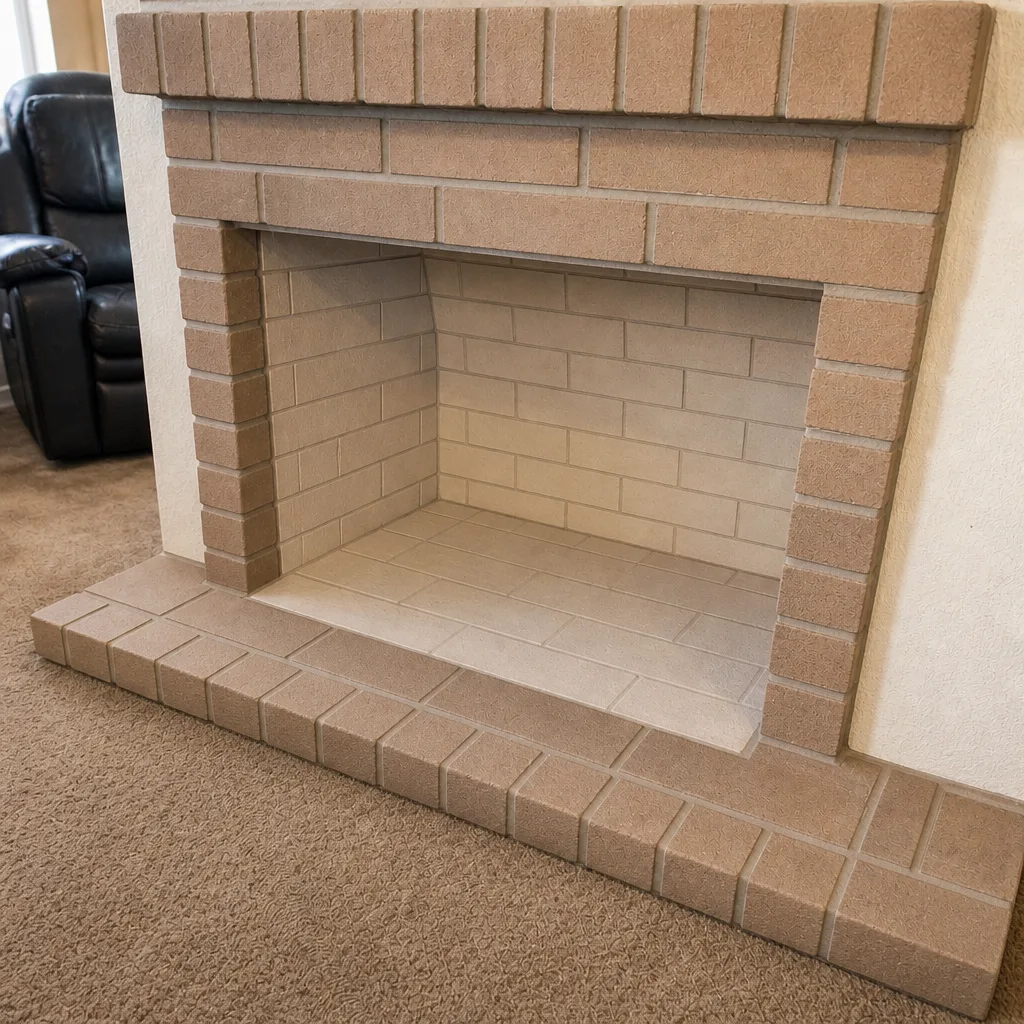
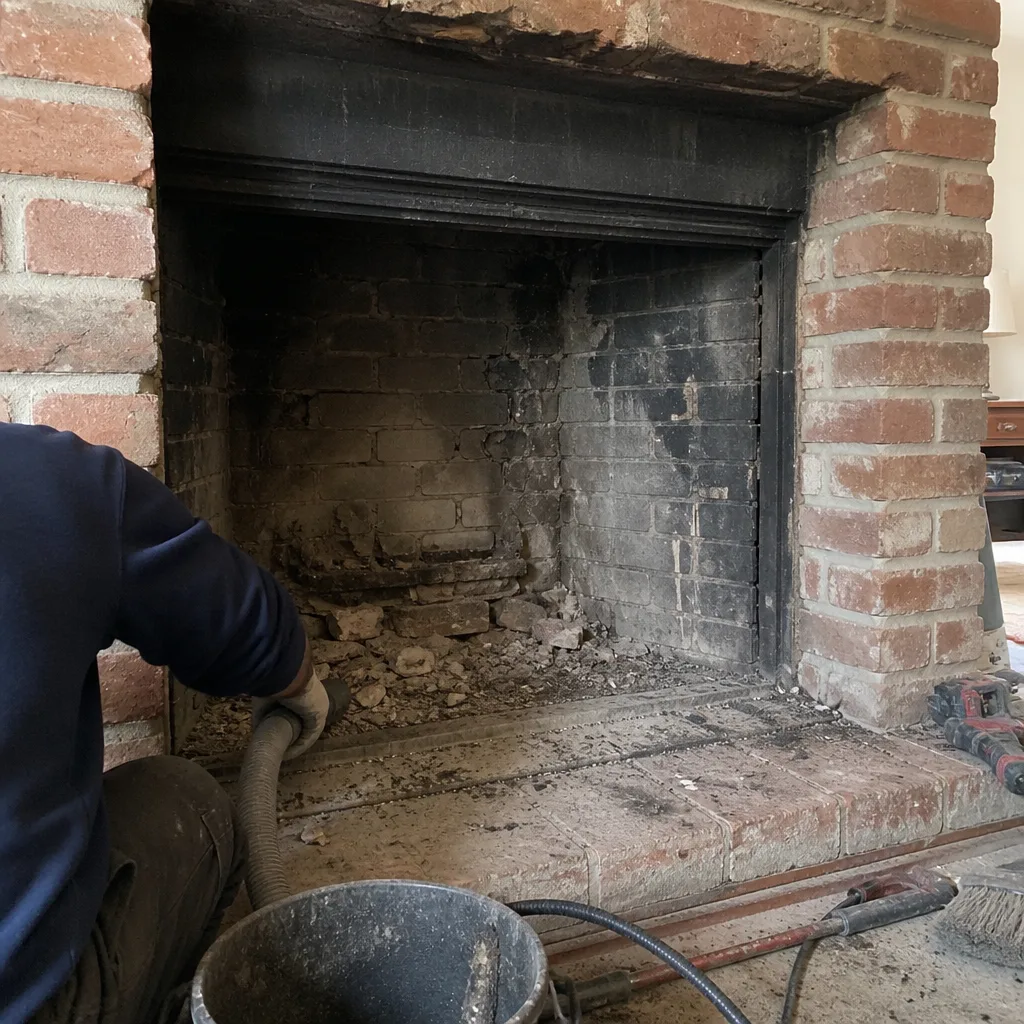
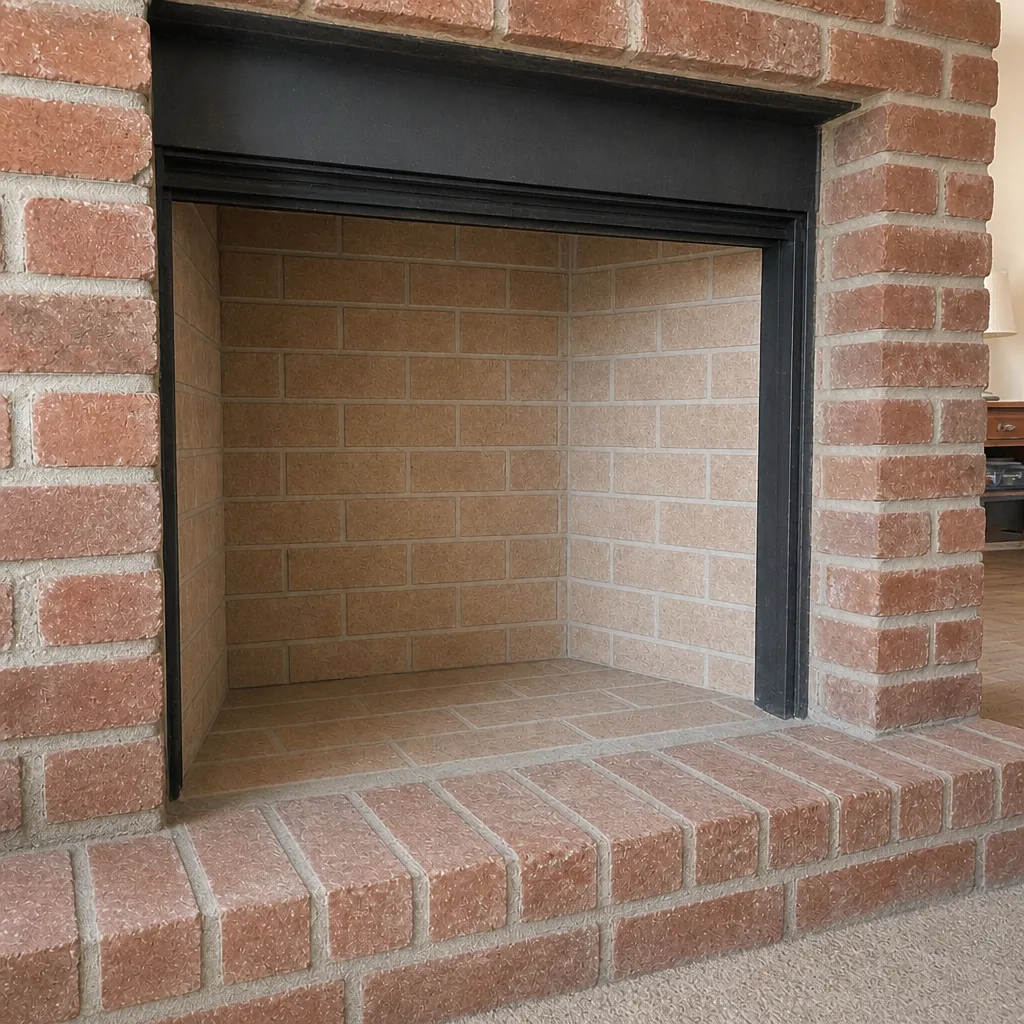
See the difference
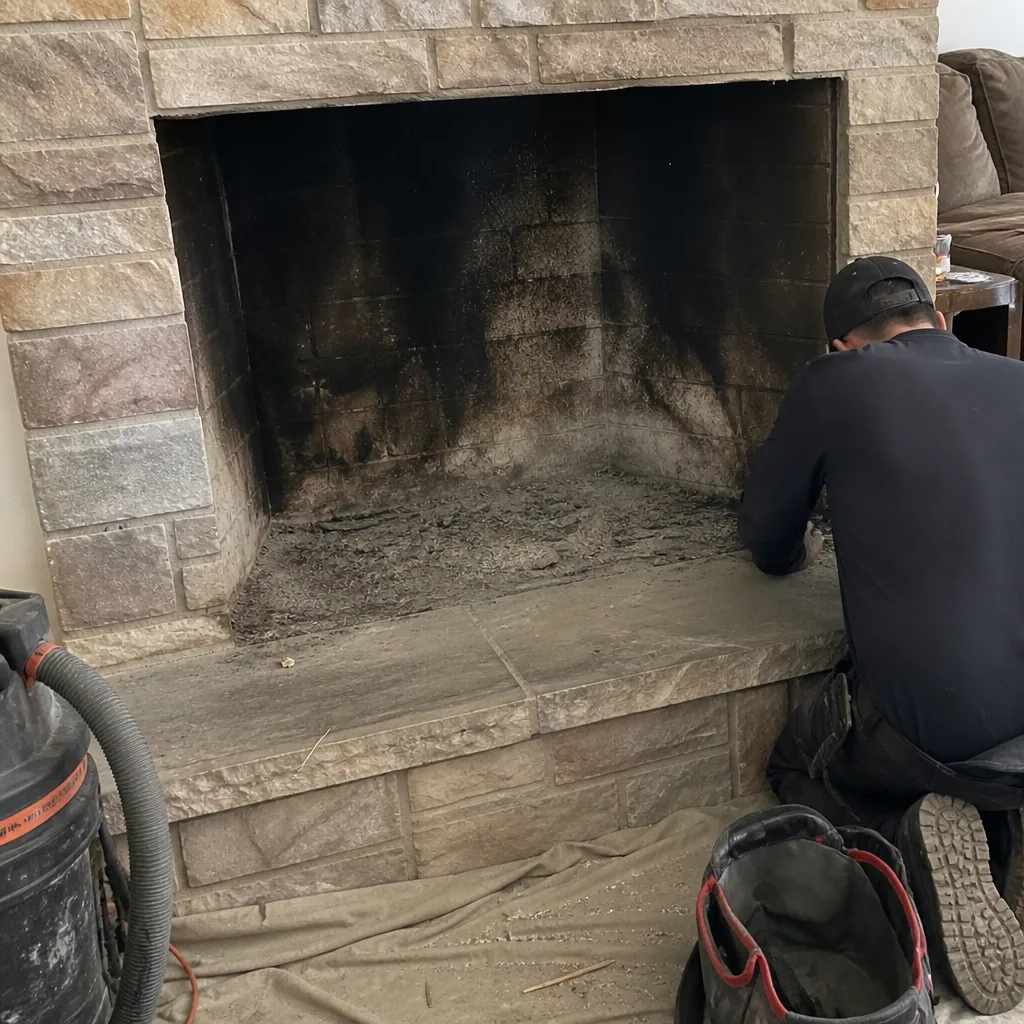 Before
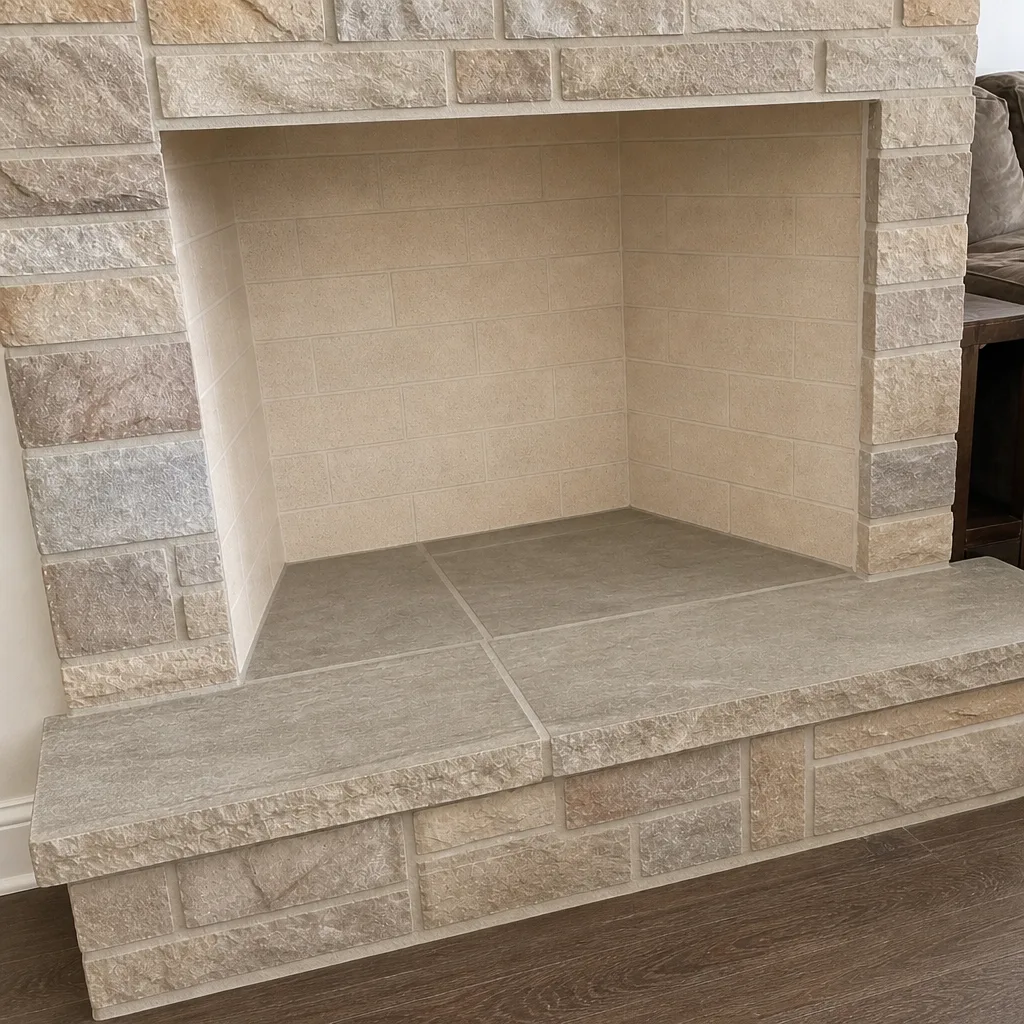 After
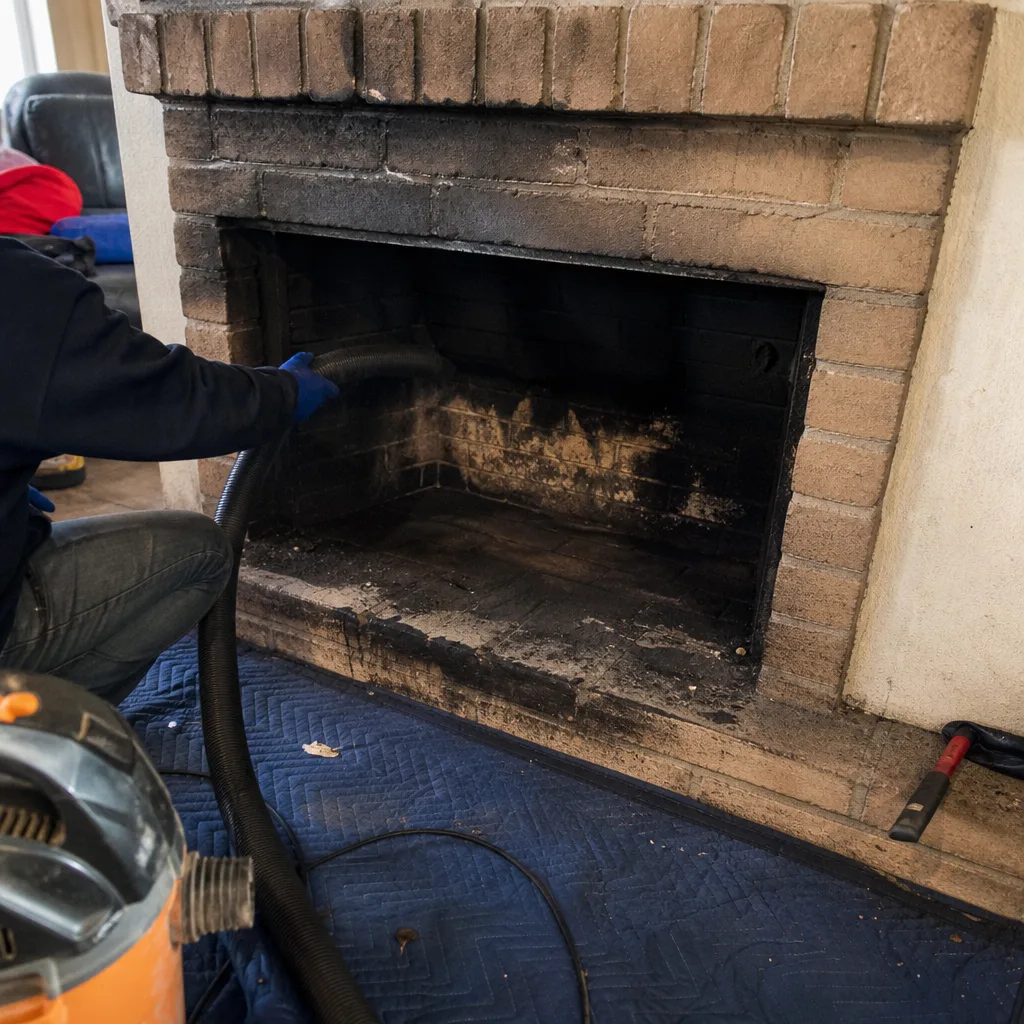 Before
 After
 Before
 After
When to Call a Professional
Call a chimney professional in Mesa if you haven’t had the flue inspected since before the last monsoon season. That’s the single clearest trigger, because the summer is when the damage happens, and September is when it can be caught cleanly. Call if you notice a damp, ash-like smell from the fireplace after a storm, water staining on the chimney breast or around the flashing, or a whitish bloom on the outside masonry. Call if the fireplace smokes back into the room, draws sluggishly, or produces a smell you didn’t have last season. Call if you had a bird or nesting material come down the flue over the summer. Call if this is your first burn season in a Mesa home and you don’t know the condition of the liner or the crown. And call if a previous company told you a repair was needed and you didn’t get to see the evidence. Mesa Chimney Sweep offers free estimates in Mesa. Call (866) 796-7711. We answer 24/7. Fast dispatch from 7am to 7pm, Sunday through Friday.
Frequently Asked Questions
In Mesa, most wood-burning fireplaces should be swept once a year, in October, and inspected separately in September after the monsoon. The September inspection catches summer damage; the October sweep clears the flue and sets up the burning season. If you burn heavily, or burn unseasoned wood, more frequent sweeps may be more appropriate. Call (866) 796-7711 for an exact answer to your situation. Estimates are free.
You only need a new liner if the camera shows a cracked, spalled, or otherwise compromised flue tile, and you should be able to see that evidence yourself before agreeing to anything. A damaged liner is the finding that has to be fixed before the burning season, because hot gas reaches the house structure through the crack. If the liner is intact, the answer is no. We show you exactly what we find on the camera before recommending a reline or a HeatShield resurfacing. Call (866) 796-7711 for an exact quote on your chimney. Estimates are free.
In a Mesa home, the risk is that the summer opened a hairline crack in the flue liner or the crown and you’ll burn into it without knowing. The crown crack intakes water, the liner crack reaches the structure, and the first warning you get can be a smoke-back or a smell. It doesn’t always happen, but when it does, the repair is more urgent and more expensive than if it had been caught in September. The inspection is the cheap way to know. Call (866) 796-7711 for an exact quote. Estimates are free.
Because October is the last month where you can sweep and still have time to fix anything the sweep finds before you actually want a fire. A December sweep puts the repair decision up against your first burn, and the correct response in December is often “don’t burn until this is fixed”, which is a worse position to be in than October. Schedule the sweep in October and the calendar works for you. Call (866) 796-7711 to get on the schedule. We answer 24/7. Fast dispatch from 7am to 7pm, Sunday through Friday.
Dryer vent cleaning is a real service and the second most common household exhaust fire hazard, so it’s not a filler job. The question is timing, not whether it’s needed: if the vent line is restricted, the dryer takes longer to dry and the risk rises. If it’s clear, we’ll tell you it’s clear. It can be combined with a chimney visit or done on its own. Call (866) 796-7711 for an exact quote on the dryer vent. Estimates are free.
Look from the ground, not the roof: check the crown with binoculars, the stucco and siding at the chimney base, and the cap and spark screen. Then smell the fireplace after the next rain, which is where a damp smell shows up. Any of those findings is a reason to book an inspection in September rather than October. Don’t go up on the roof yourself. Call (866) 796-7711 and we’ll schedule a technician to look at it properly. We answer 24/7. Fast dispatch from 7am to 7pm, Sunday through Friday.
The Bottom Line
Chimney care in Mesa isn’t a fall chore. It’s a year-round cycle built around two events most chimney advice ignores: the monsoon season that damages crowns, mortar joints, and flashing between July and September, and the summer heat cycling that opens hairline cracks showing up months later as a compromised flue. The correct rhythm is a September inspection to catch the summer’s damage, an October pre-season sweep to get the flue ready and fix what was found, spring checks to keep pests and water out of an idle chimney, and a scheduled dryer vent cleaning alongside the fireplace work. The single most important move is October: it’s the month where you still have time to fix a problem before the burning season rather than after. Everything else is secondary to having that free move available.
We’re a full-service chimney and ventilation specialist, which matters to how we work: we carry the professional-grade materials we recommend, including DuraFlex, HeatShield, Gelco, Olympia Chimney, Famco, and Copperfield. Our technicians have up to 11 years of experience. We work on Mesa homes from the foothills to the older neighborhoods near the canal, and we show you what we find before recommending anything. Our Mesa page lists the areas we serve. If you’re ready to get the chimney calendar right for your home, call (866) 796-7711. We answer 24/7. Fast dispatch from 7am to 7pm, Sunday through Friday.
Written by the team at Mesa Chimney Sweep.