
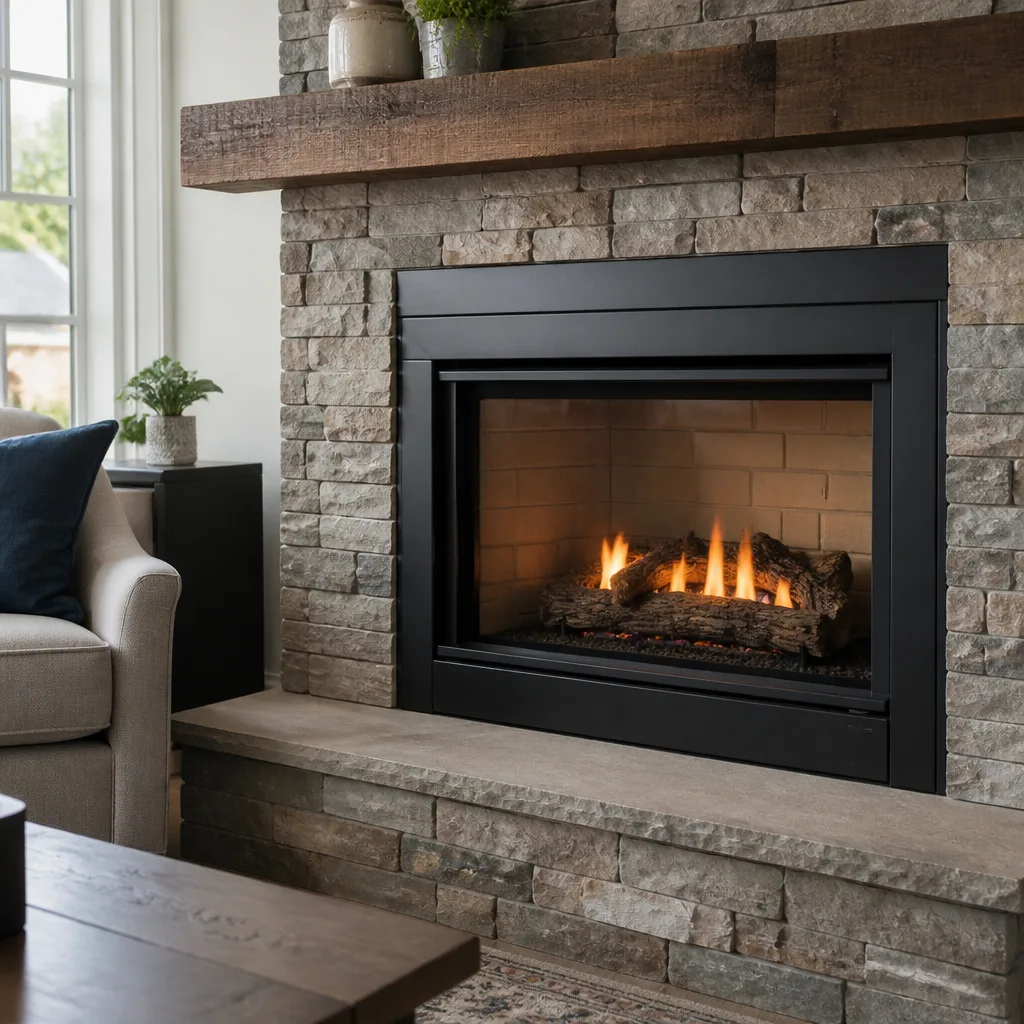
 Gas fireplace service
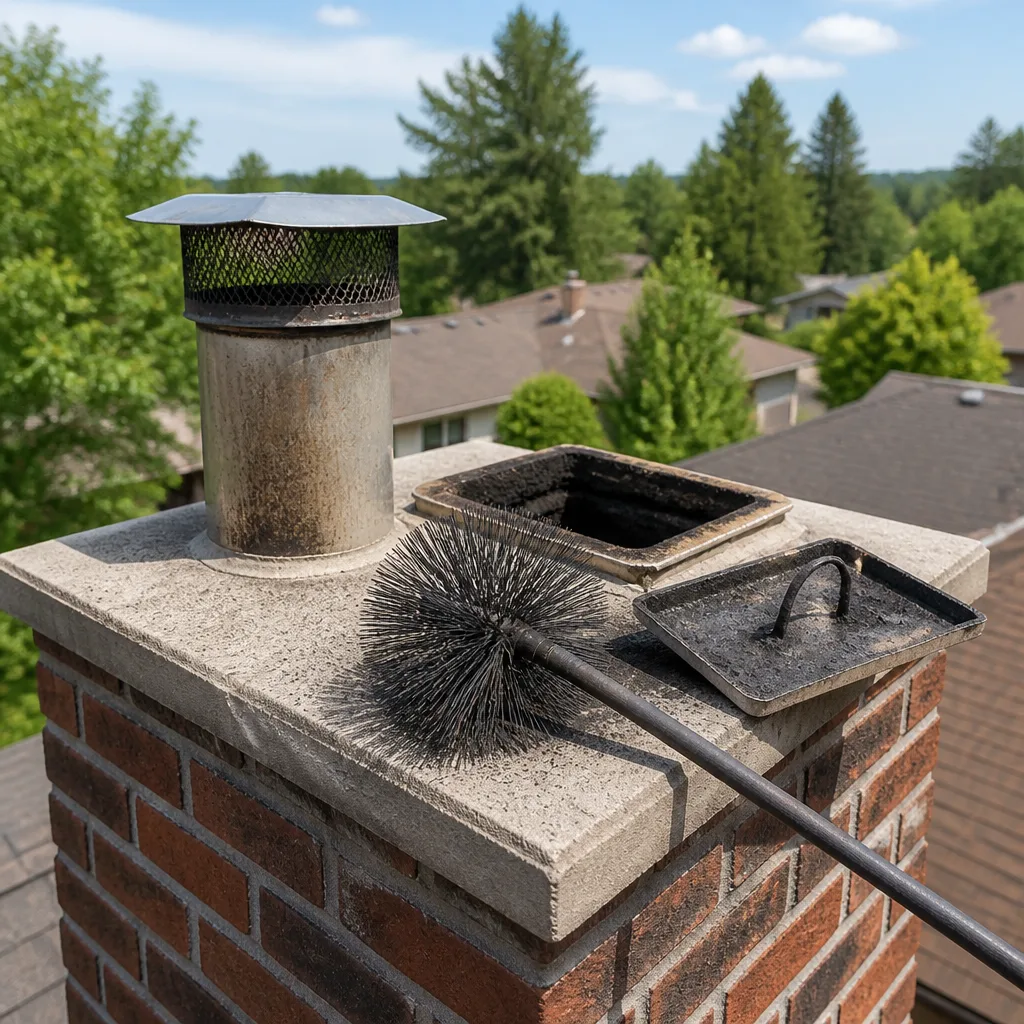 Sweep & inspection
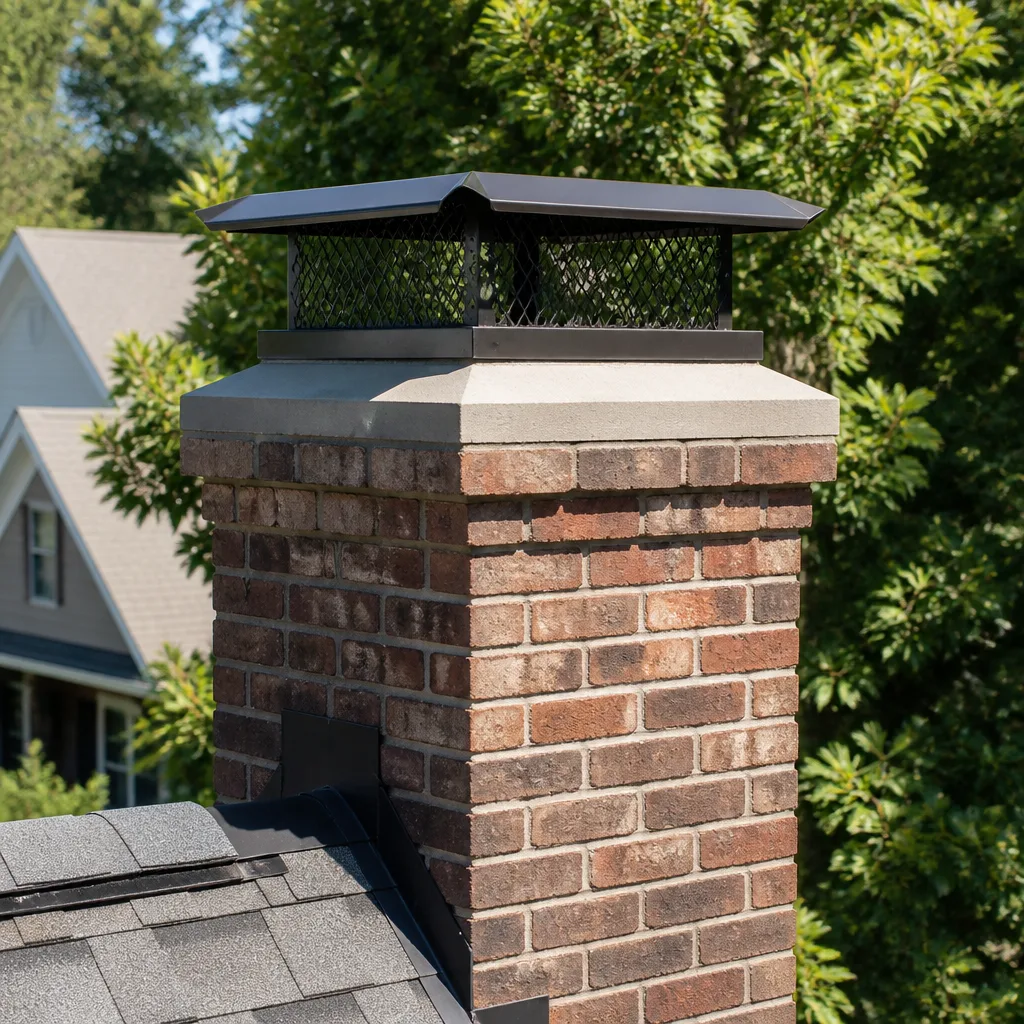 Caps & crowns
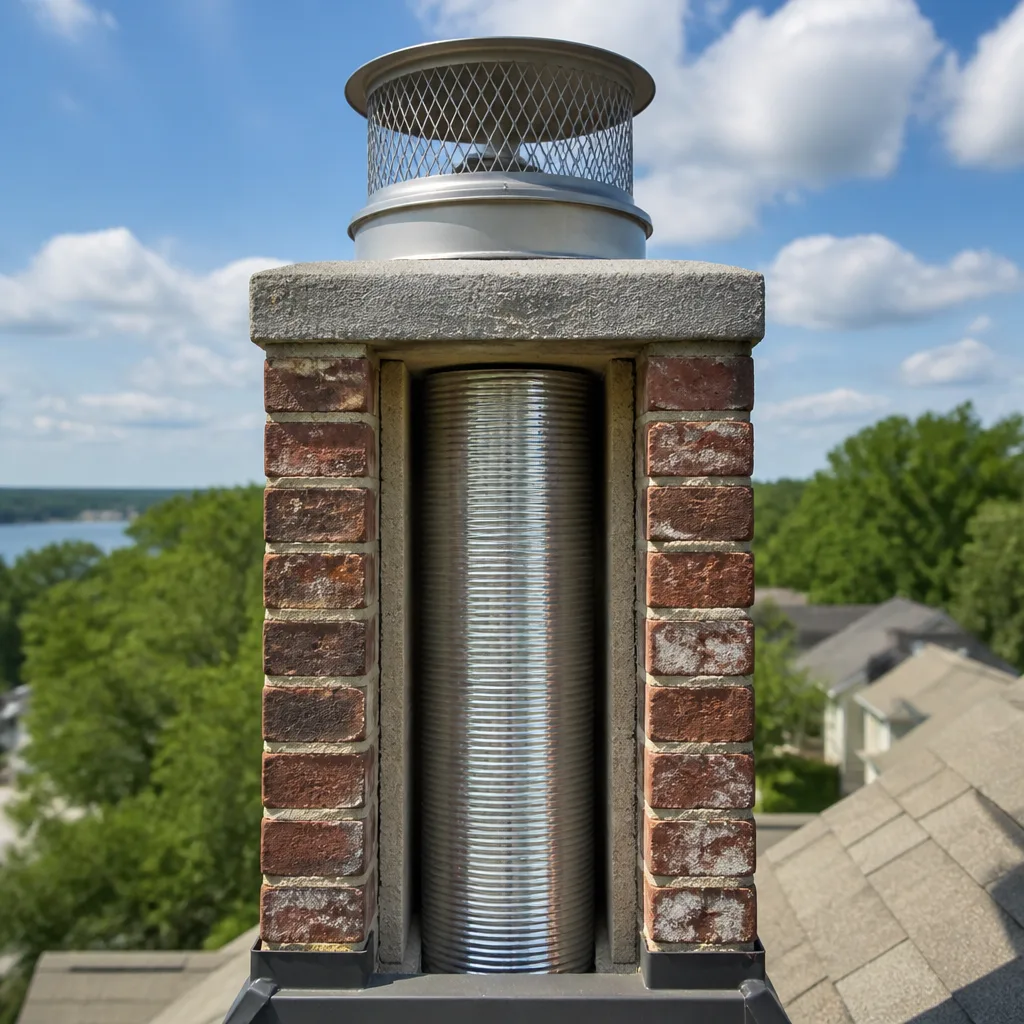 Flue relining
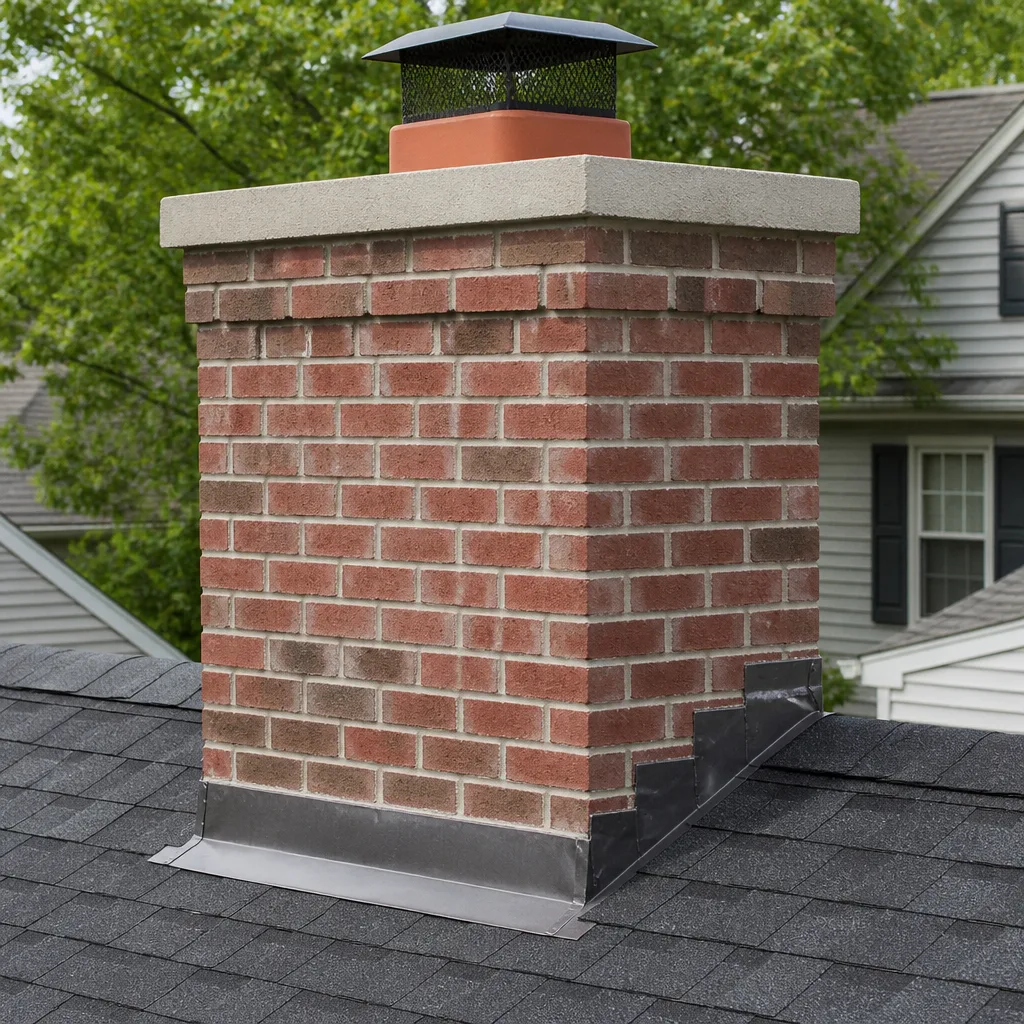 Masonry repair
Level 1 sweep and inspection to the NFPA 211 annual standard - flue, crown, cap, and flashing checked and photographed
Chimney sweep logs do not sweep chimneys. They loosen some creosote - which then falls where a brush and vacuum still have to collect it.
Why Mesa Homeowners Choose HeatShield Chimney Cleaning
We provide independent HeatShield chimney cleaning and service in Mesa, AZ. HeatShield is a cast-in-place refractory liner system, not a brand of chimney or appliance, and that distinction matters here: a HeatShield-lined flue needs a camera-first inspection and softer tooling before anyone touches it with a brush. Most homeowners searching for “HeatShield chimney cleaning in Mesa” have a lined flue, a few winters of use on it, and questions about whether sweeping will damage the surface or reveal something worse.
We are not affiliated with, authorized by, or endorsed by HeatShield. We’re an independent chimney service that works on HeatShield-lined flues across Mesa, from the historic West Side to the East Valley subdivisions. If your fireplace was relined at some point and you want a sweep who reads the liner before sweeping it, that’s the job we do. Call (866) 796-7711. We answer 24/7. Fast dispatch from 7am to 7pm, Sunday through Friday.
What “HeatShield chimney cleaning” actually means in Mesa
A HeatShield Ceramic Liner System is a cast-in-place refractory liner poured to insulate and resurface a damaged flue. It’s applied on site, cured in place, and left as a smooth refractory surface inside masonry. So the work of “cleaning” a HeatShield-lined chimney isn’t the same as cleaning clay tile. The surface is softer. It bonds differently to creosote. And it shows failure modes that clay tile doesn’t, usually at the crown, the top few courses, and the transition to the damper frame.
Mesa’s chimney market is dominated by fireplace-equipped homes in the historic West Side and the 1970s – 90s East Valley subdivisions. Many of those fireplaces are wood-burning units in ranch homes from the citrus-farming era. Somewhere along the way, a damaged or failing clay tile liner got resurfaced with HeatShield rather than torn out. That history is what makes Mesa chimneys a mixed bag and what makes the inspection step the most important part of the job.
- Flat-price sweep agreed before booking. You know the cost before anyone starts.
- Camera inspection and photo report included. You see what we see.
- HeatShield resurfacing and DuraFlex relining capability. If the liner is compromised, we can address it rather than refer it out.
- Licensed and insured. Our technicians have up to 11 years of experience.
Why Trust Mesa Chimney Sweep for Your HeatShield Chimney Cleaning?
HeatShield work is a materials-and-application question before it’s a parts question. That’s why we handle it differently than a generic sweep would. The technicians who work on HeatShield-lined flues read the cast refractory surface before a brush goes in. They know which areas show heat cycling, which areas show desert sun exposure at the crown, and which sections might be debonded underneath. That read is what separates a competent sweep from one who forces a stiff poly brush into a soft refractory surface and gouges it.
Our technicians have up to 11 years of experience with cast refractory liners and the tooling they demand. We use appropriate tooling matched to the liner surface, chemical creosote removal where standard brushing would risk damage, and quality materials that fit the flue when repair or touch-up is needed. We don’t claim to stock OEM or genuine HeatShield parts, and we don’t claim factory certification or a dealer relationship. What we do is service, sweep, and repair HeatShield-lined flues with the same materials professionals specify, including HeatShield mix for reline touch-up where the application calls for it, and quality aftermarket dampers, caps, and crowns matched to the flue.
Warranty-safe practice matters here. When a HeatShield liner is under any manufacturer coverage, the sweep has one obligation: don’t cause new damage. Camera-first inspection, appropriate tooling, documentation of condition before and after, and no aggressive brushing on the refractory surface all protect the liner’s integrity. When something needs fixing, we say so and show you why. When it doesn’t, we say that too. That’s how we keep the work honest on a lined chimney.
Styles & brands we work with
- Sweep & inspection
- Caps & crowns
- Flue relining
- Masonry repair
- Gas fireplace service
Common HeatShield Chimney Cleaning Problems We Fix in Mesa
HeatShield cast refractory liners show a different set of failures than clay tile. These are the ones we see most often on Mesa chimneys.
- Liner cracking at the crown and top few courses. The top of a Mesa chimney takes the worst of both heat cycling and summer sun. The cast refractory expands and contracts against the masonry, and the top of the liner is where that movement concentrates. Hairline cracks there aren’t cosmetic. They let moisture and creosote behind the liner surface, and they widen over time. Our inspection reads the crown and top courses first, with a camera, before we recommend anything else.
- Loss of bond between the cast refractory and the clay tile or brick substrate. HeatShield is poured against the original substrate, so the bond is what makes the system work. When that bond fails, it shows as hollow-sounding sections or loose flakes during a sweep. A homeowner usually learns about this because the sweep found it, not because anything visible changed at the firebox. We flag it as a repair trigger, not a cleaning finding, because debonded sections need evaluation before the fireplace is used again.
- Creosote glazing that bonds tightly to the refractory surface. Glazed creosote, sometimes called stage 3, doesn’t brush off. On clay tile it’s stubborn. On a softer refractory surface it’s also a gouging risk if someone forces the brush. Standard poly tooling won’t cut it, and it shouldn’t be asked to. We use chemical creosote removal to break the bond first, then sweep with tooling that respects the surface. That’s a different job than forcing it loose.
- Debris and sand accumulation at the smoke chamber base. Where the HeatShield pour transitions to the damper frame, there’s a shelf. Monsoon dust blows in through gaps and settles there. Sand, grit, and light debris build up across the summer, and by the first cold snap of winter the flue is partly restricted. Draft complaints usually trace back to this transition, not the flue itself. We check that shelf with the camera and clear it during the sweep.
- Crushed spark arrestors and bird nests packed into caps on older Mesa chimneys. After a monsoon microburst, Mesa techs commonly find spark arrestors crushed and bird nests packed into the caps on older West Side homes. That’s a cap and crown issue as much as a flue issue, and it directly affects how well a HeatShield-lined flue drafts. If the cap is compromised, the liner doesn’t get to do its job cleanly. We assess the cap and crown alongside the liner because they’re part of the same system.
One more pattern that shows up on Mesa chimneys worth knowing about: many of these 1970s ranch fireplaces were built with exterior chimneys that crack at the crown from summer heat expansion. That’s a failure mode rarely seen in cooler climates, and it’s the same crown that sits above a HeatShield liner. When the crown is cracked, the top of the cast liner is usually the next thing to show stress. Our inspection reads both together.
How a typical HeatShield job usually goes in Mesa
A homeowner with a HeatShield-lined masonry fireplace calls because smoke rolls into the room. An inspection often finds glazed creosote bonded to the refractory surface plus debris collected at the smoke chamber transition. Because the liner surface is softer than clay tile, the approach that works is a Level 2 inspection with a camera first, then chemical creosote removal and a careful sweep with appropriate tooling rather than aggressive brushing. If the inspection shows cracking or debonding in the cast liner, the recommendation shifts from cleaning to reline or spot repair before the fireplace is used again. That’s what Mesa’s climate and Mesa’s housing stock produce on lined flues.
HeatShield Parts & Our Repair-vs-Replace Approach
HeatShield repairs are a materials-and-application question more than an OEM part question. Genuine HeatShield mix and application specs matter for any reline touch-up. Dampers, caps, crowns, and firebox brickwork are best handled with quality aftermarket or masonry components matched to the flue. We choose materials that fit the liner and the appliance, not the cheapest substitutes available.
The repair-versus-replace decision is straightforward once the inspection is done. A HeatShield liner in sound condition gets swept and inspected. A liner with hairline surface cracking in one localized area may justify spot repair with HeatShield mix rather than a full reline. A liner with debonding across long sections, or cracking that runs through the cast at the crown, justifies the cost of relining rather than repeated spot repairs. We don’t recommend a reline unless the evidence supports it, and we don’t recommend running a fireplace on a cracked or debonded liner.
If your HeatShield liner is failing, we can also reline the flue with a DuraFlex flexible liner system where that’s the better path for the chimney. Either way, you see the camera evidence and the written estimate before anyone starts work. The price is set per job by the written estimate. Call (866) 796-7711 for an exact quote. Estimates are free.
Our HeatShield Service Process – Step by Step
- 1
Diagnosis. We start with a Level 2 inspection: camera run through the full flue, close read of the cast refractory surface, the crown and top few courses, the smoke chamber transition at the damper frame, and the cap and crown above. You get the photo report, and we walk you through what we found. No recommendations without visible evidence.
- 2
Repair or install. If the liner needs touch-up, we use genuine HeatShield mix and application specs where the job calls for it. If it needs a full reline, we install DuraFlex. Caps, crowns, and dampers are matched to the flue with quality components. The written estimate sets the final price.
- 3
Test. After cleaning or repair, we check draft and confirm the smoke path is clear. Camera-verify the surface we worked on. Clean up fully and haul out what we removed.
- 4
Documentation. You receive the photo report and a summary of what was done, what was found, and what to watch at the next sweep. The liner’s condition before and after is documented so any coverage question has a record behind it.
See the difference
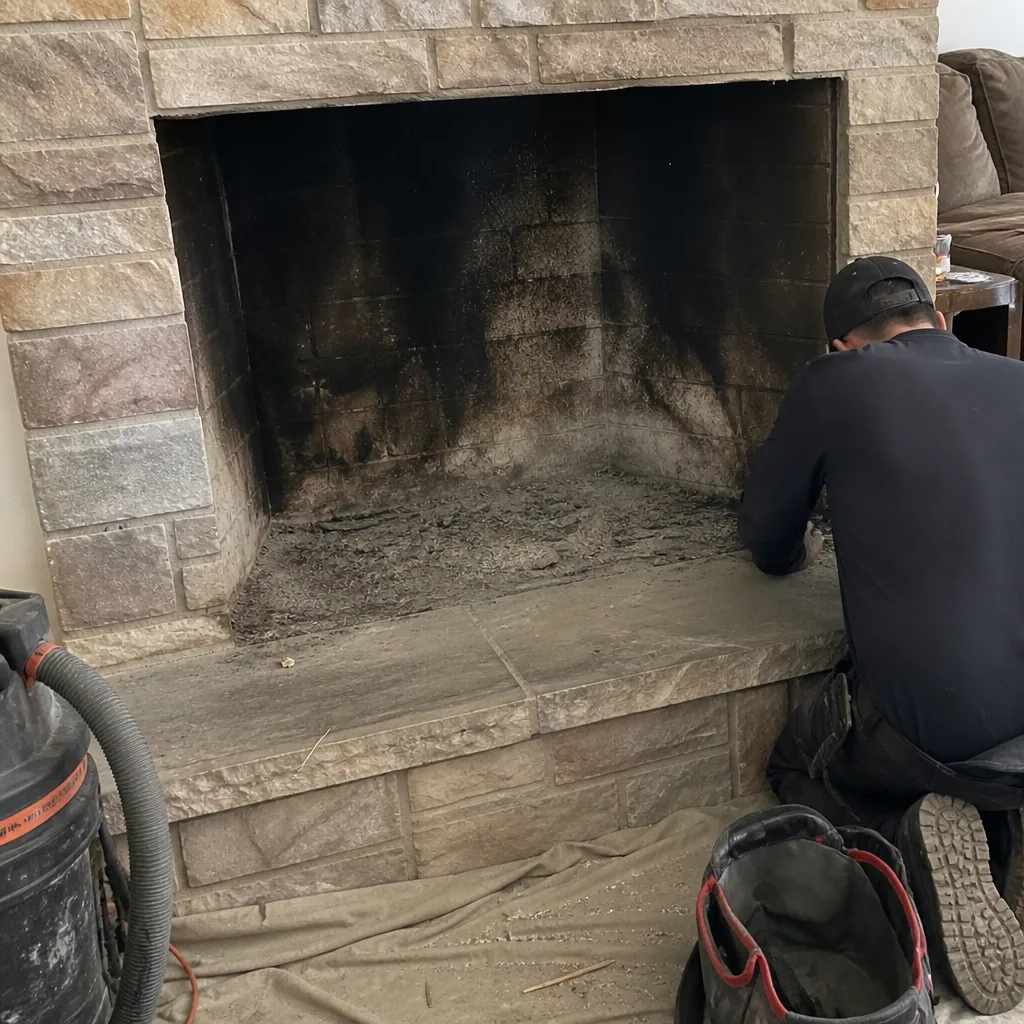 Before
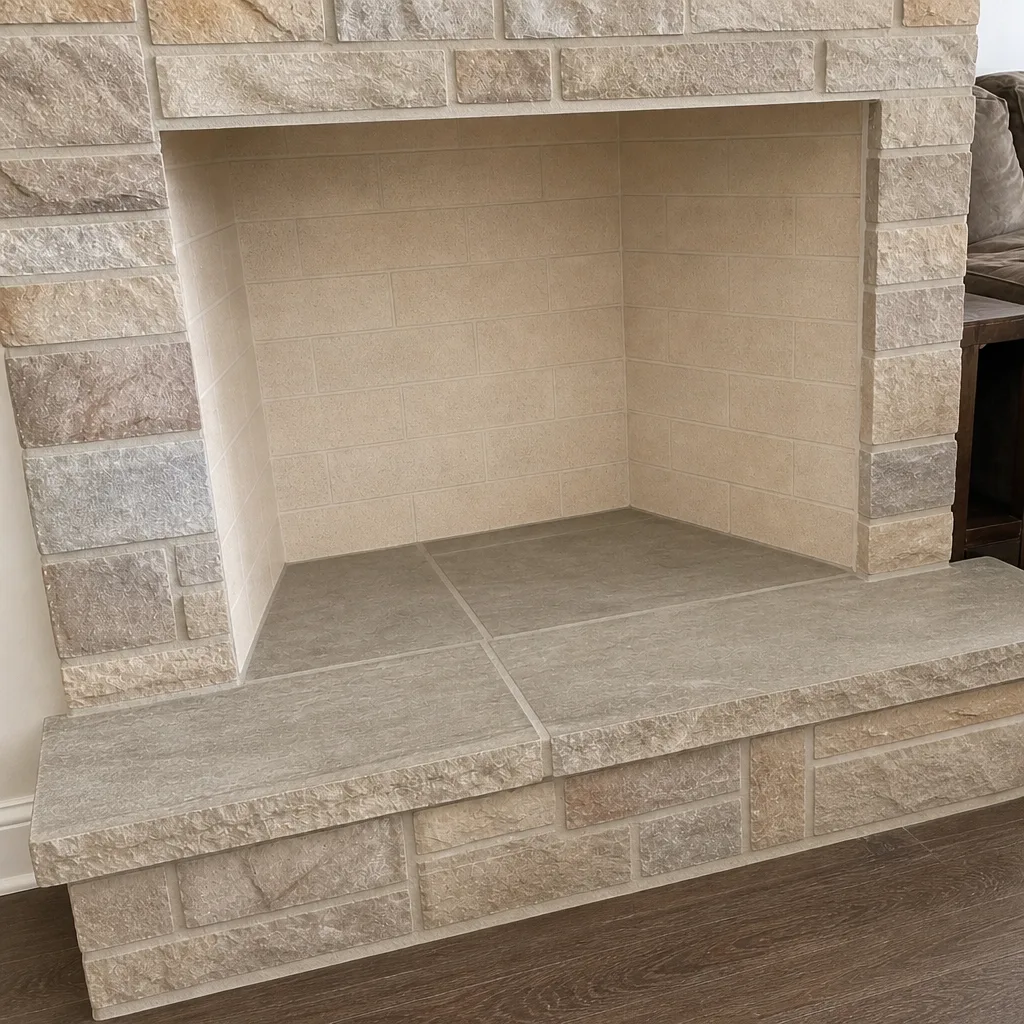 After
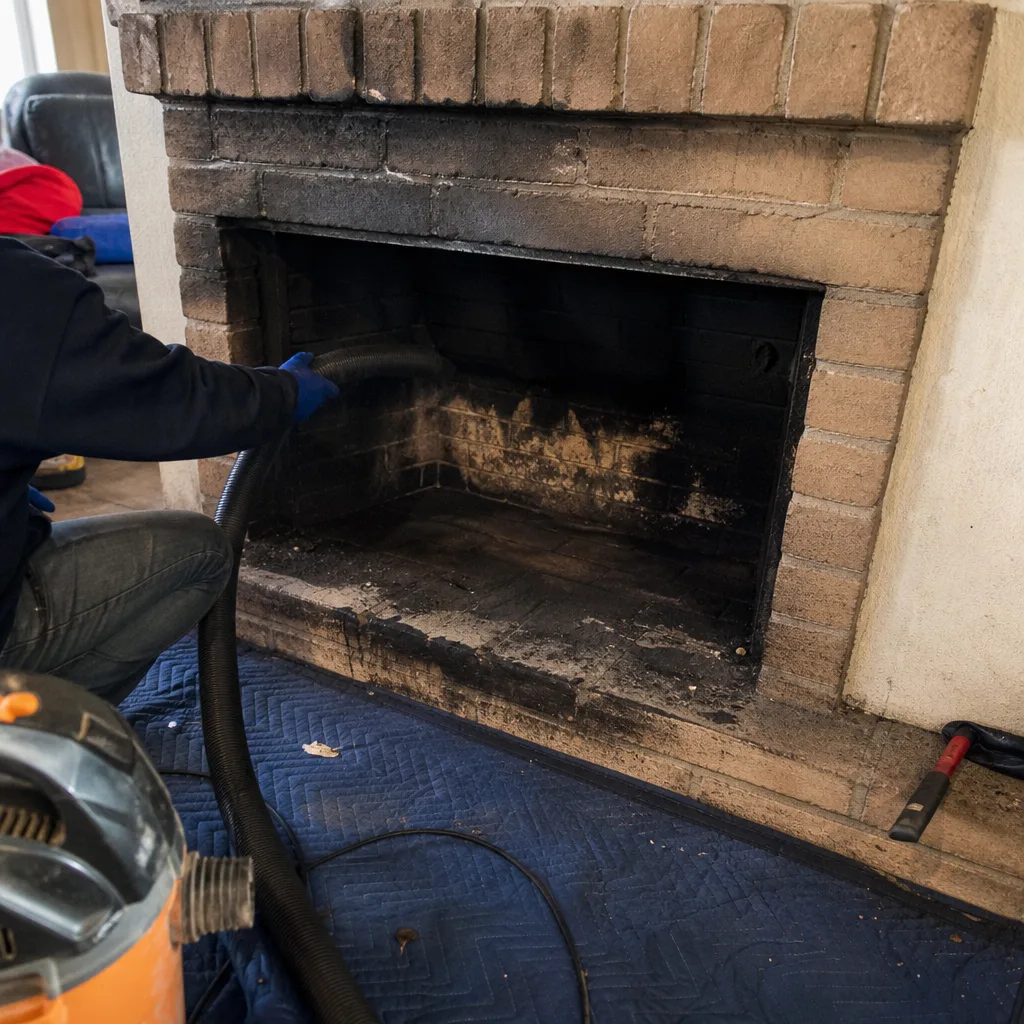 Before
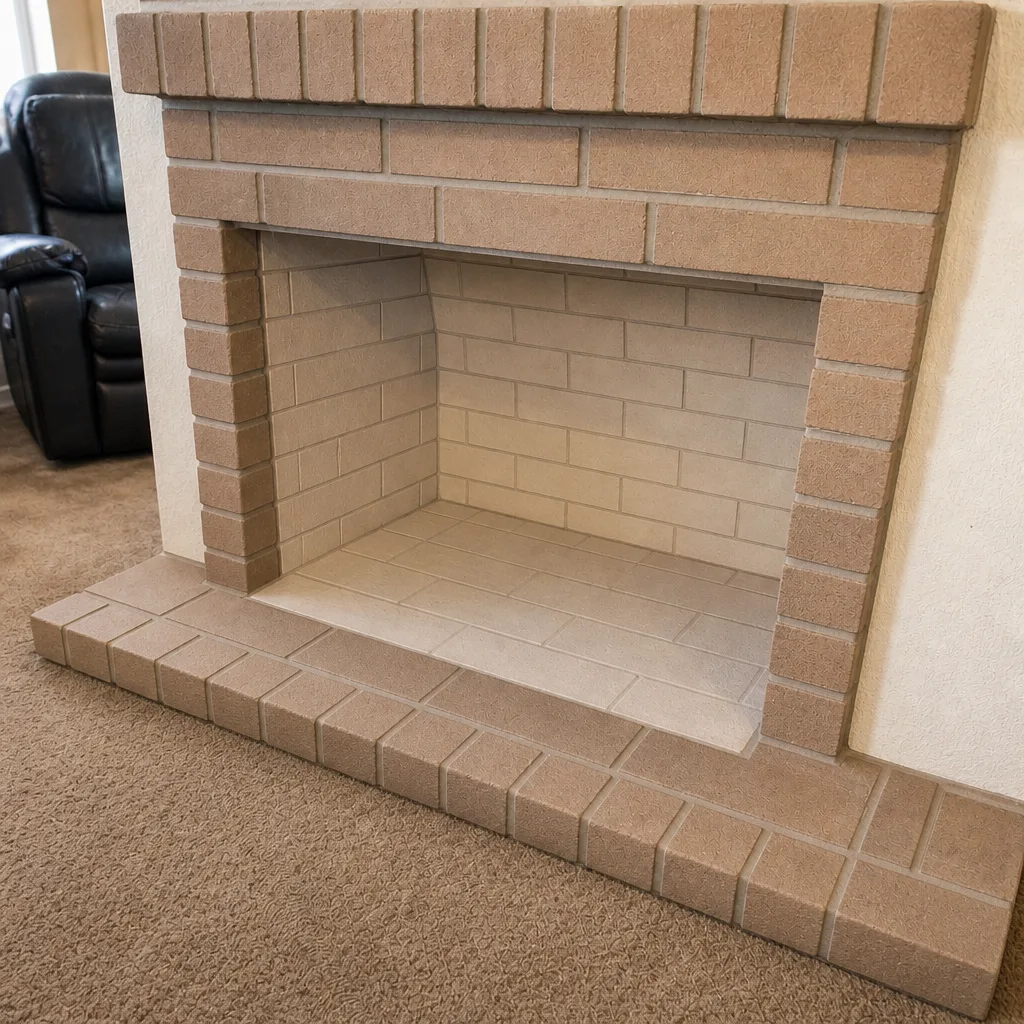 After
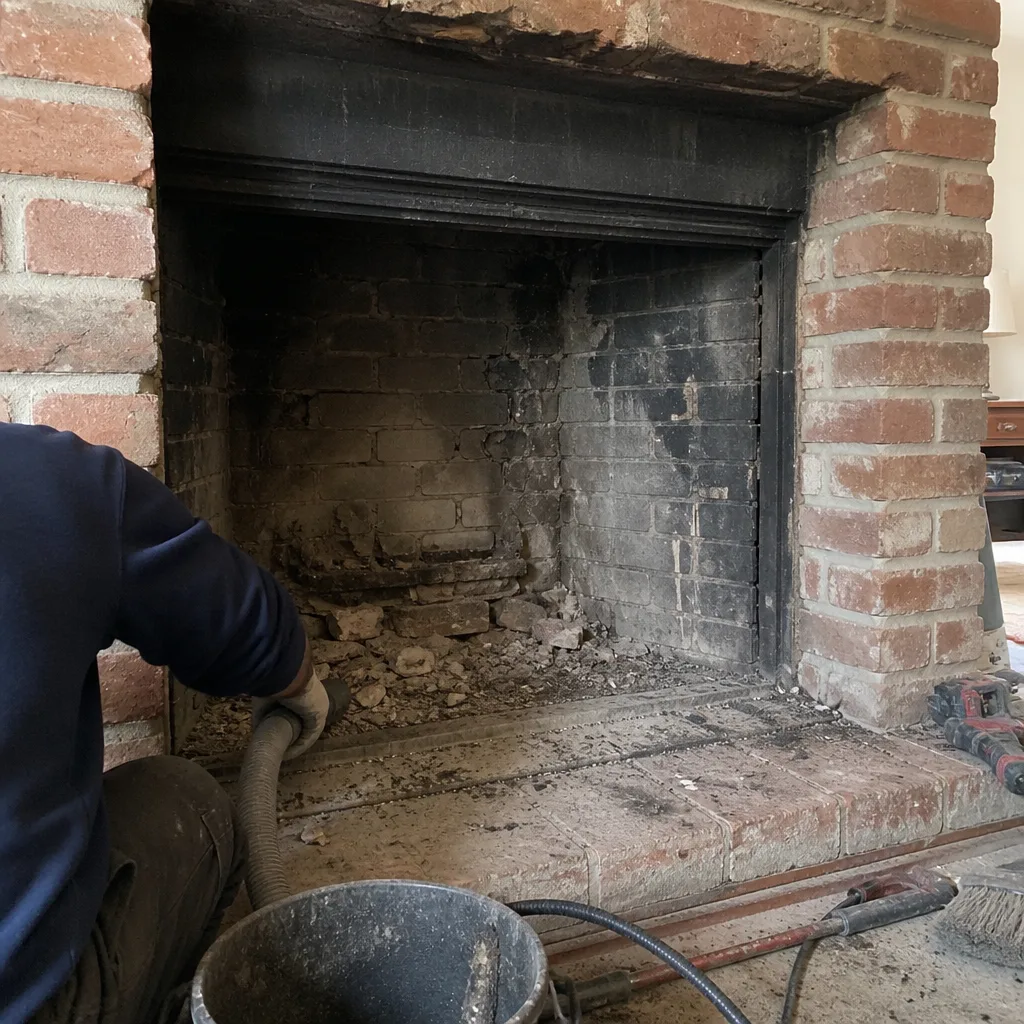 Before
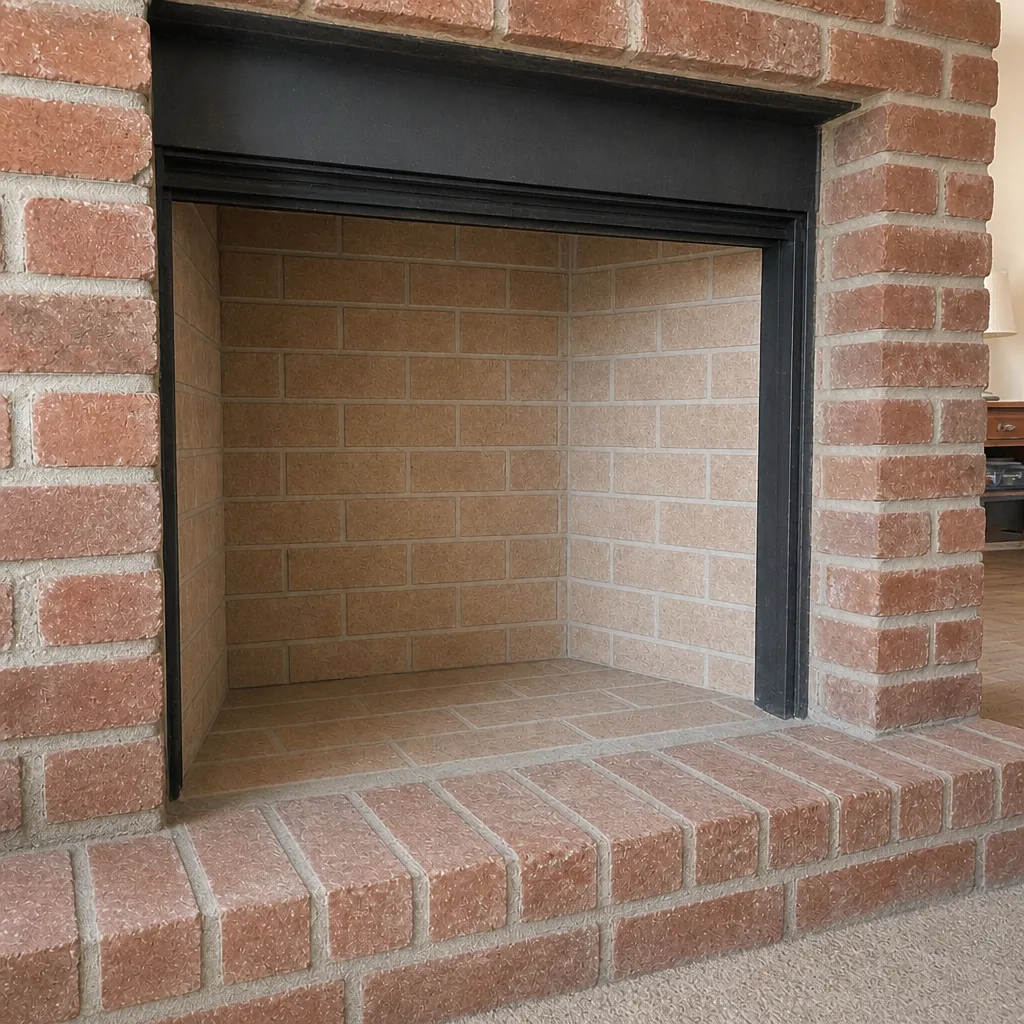 After
HeatShield Products We Service & Install in Mesa
We service and install the HeatShield Ceramic Liner System: a cast-in-place refractory liner poured to insulate and resurface a damaged flue. That’s the full system as a class, applied to masonry fireplaces in Mesa that originally had clay tile liners and needed resurfacing rather than a teardown. Where a reline touch-up needs genuine HeatShield mix, the Standard and Insulation Mix formulations matter for the application. We don’t claim to stock OEM or genuine HeatShield parts, and we’re not a HeatShield dealer. We’re the service company that works on the system with the materials the job calls for.
On HeatShield-crowned flues on mid-century Mesa masonry fireplaces with original clay tile liners, the scope is: leveled inspection, creosote removal with appropriate tooling, annual sweep, and any cap, crown, or damper work the flue needs to draft cleanly.
We Also Service These Brands
We’re not a single-brand shop. Alongside HeatShield work, we service and install DuraFlex flexible liner systems for full relines on compromised or outdated chimneys, and Gelco components where they fit the flue. Olympia Chimney, Famco, and Copperfield are also in the materials we work with. If your chimney has a mix of brand components, we read the whole system rather than assuming the liner is the only part that matters.
FAQs – HeatShield Chimney Cleaning Service in Mesa
No. We are an independent HeatShield service provider, not authorized, certified, endorsed, or sponsored by HeatShield. We’re not a HeatShield dealer and we don’t claim a manufacturer relationship. What we do is service HeatShield-lined flues with the right tooling and the right materials for the job. If you need your liner’s warranty paperwork filed with HeatShield, that’s between you and the manufacturer; we can document the condition before and after our work so you have a record. Call (866) 796-7711 if you want an inspection booked.
Yes. We use quality materials that fit the flue and the appliance: genuine HeatShield mix and application specs for reline touch-up, and quality aftermarket or masonry components for dampers, caps, crowns, and firebox brickwork. We don’t claim to stock OEM or genuine HeatShield parts, and we don’t install substitutes that compromise the liner. If a part needs to be sourced, we say so and price it on the estimate. The written estimate sets the final price. Call (866) 796-7711 for an exact quote. Estimates are free.
A routine sweep on a HeatShield-lined flue generally takes a couple of hours, and a full Level 2 inspection with camera and photo report fits in the same visit. If the inspection shows a repair, the timeline depends on whether it’s spot repair with HeatShield mix or a full reline with DuraFlex, and that’s booked after you’ve reviewed the estimate. We don’t rush a lined flue because the tooling and chemical creosote removal take what they take. Call (866) 796-7711 to book a slot.
We cover the HeatShield Ceramic Liner System as a class: cast-in-place refractory liners poured to insulate and resurface damaged flues on masonry fireplaces. That includes Level 2 inspection, creosote removal, annual sweep, and repair work on HeatShield-crowned flues on mid-century Mesa fireplaces with original clay tile liners. We don’t name or claim to cover model lines or series beyond the system itself, because the service is about the liner in your flue, not the catalog number. Call (866) 796-7711.
Not if the service is done correctly. HeatShield warranty questions usually come down to whether the liner was damaged by the sweep or by the chimney’s own condition. Camera-first inspection, appropriate tooling for the softer refractory surface, chemical creosote removal instead of aggressive brushing, and documentation of condition before and after are what protect the liner and any coverage behind it. We work warranty-safe. If we find something that needs attention, we show you and we don’t touch it without your go-ahead. Call (866) 796-7711 with questions before you book.
A HeatShield sweep in Mesa typically falls in the same range as a standard sweep, with the exact figure set per job by the written estimate. Heavier creosote, a liner that needs chemical removal rather than brush removal, or a clogged smoke chamber transition can move it, but you’ll know before we start. The flat-price sweep is agreed before booking, and the price doesn’t change mid-job. Call (866) 796-7711 for an exact quote. Estimates are free.
No. A HeatShield cast refractory surface is softer than clay tile, so it takes appropriate tooling and a camera-first check before a brush goes in. Glazed creosote that bonds tightly to the refractory surface needs chemical removal rather than a forced brush, or you risk gouging the liner. That’s the main handling difference. Call (866) 796-7711 to book a HeatShield-aware sweep.
Signals that point to failure, not dirt: hollow-sounding sections when the liner is tapped, loose flakes during a sweep, hairline cracking at the crown or top few courses, or creosote visible behind the liner surface. Drift or smoke rolling back into the room at start-up can be either a draft restriction at the smoke chamber transition or a debonded section, and you can’t tell which without a camera. If any of these show up, we inspect before we sweep. Call (866) 796-7711.
It doesn’t change the frequency much; it changes the handling. A wood-burning fireplace with a HeatShield-lined flue still needs an annual sweep and a Level 2 inspection, and in Mesa that timing matters because chimneys sit unused through triple-digit summers and take on monsoon dust, then get worked hard in winter. Fall cleaning lands before that first heavy cold snap. A lined flue doesn’t get cleaned less often; it gets cleaned more carefully. Call (866) 796-7711 to schedule the sweep.
On a HeatShield-lined flue, the usual causes are debris and sand collected at the smoke chamber transition where the pour meets the damper frame, or glazed creosote narrowing the flue at the refractory surface, or a debonded section that shifts the draft pattern. Crushed spark arrestors and bird nests in a compromised cap also do it. The camera tells you which. We inspect before we sweep so the diagnosis drives the fix. Call (866) 796-7711.
Sometimes yes. A localized crack or a small debonded section can justify spot repair with genuine HeatShield mix, while long runs of debonding or cracking that goes through the cast at the crown justify a full reline, sometimes with DuraFlex. The honest test is whether the repair restores the liner as a working system. If it doesn’t, we say so and price the reline. If it does, we do the spot repair and leave it at that. Call (866) 796-7711 to book the inspection that answers the question.
Book Your HeatShield Service in Mesa, AZ
If your HeatShield-lined chimney needs a sweep, a Level 2 inspection, or repair work, we handle all three in Mesa with the tooling and materials the liner calls for. Camera inspection and photo report are included. The flat-price sweep is agreed before booking. Call (866) 796-7711. We answer 24/7. Fast dispatch from 7am to 7pm, Sunday through Friday. The written estimate sets the final price.
Written by the team at Mesa Chimney Sweep.